As the creative lead, I headed a comprehensive brand realignment to reposition truffls within the competitive digital HR market. This project moved beyond aesthetics, focusing on a strategic overhaul to differentiate the brand and streamline its market presence.
Brand Core
The Brand Core serves as the strategic foundation for the entire branding process. It is designed to be recognizable and tangible across all brand forms, applications, and touchpoints.
To achieve this, we synthesize fundamental ideas, define core values, and document the brand vision. To ensure these theoretical concepts are actionable and reproducible, they are ultimately refined into a set of strategic filters.
Values Workshop
The branding process begins with an associative-visual workshop, designed to capture the diverse perspectives of employees regarding the company’s character.
Participants are presented with a curated pool of 100 images and asked to select two or three that they feel best represent the organization. Each participant then explains their selection, sparking a collaborative dialogue that uncovers the underlying identity of the brand.
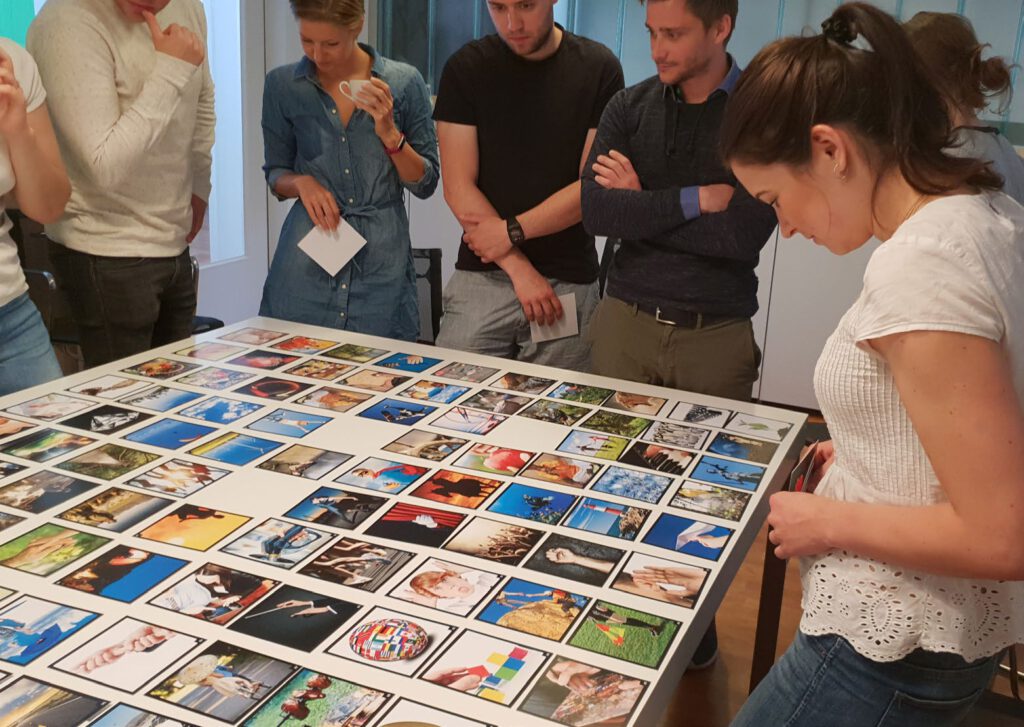
The final selection of imagery serves as the foundation for defining the brand’s character. These visuals are later used to illustrate the direct parallels between the brand’s design language and its core identity.
This visual methodology makes it easier for participants to articulate abstract concepts. Throughout the process, the moderator documents the insights in real-time. These notes are subsequently reviewed in a smaller group, where they are organized and distilled into a set of high-impact adjectives through intensive discussion.


Values Pyramid
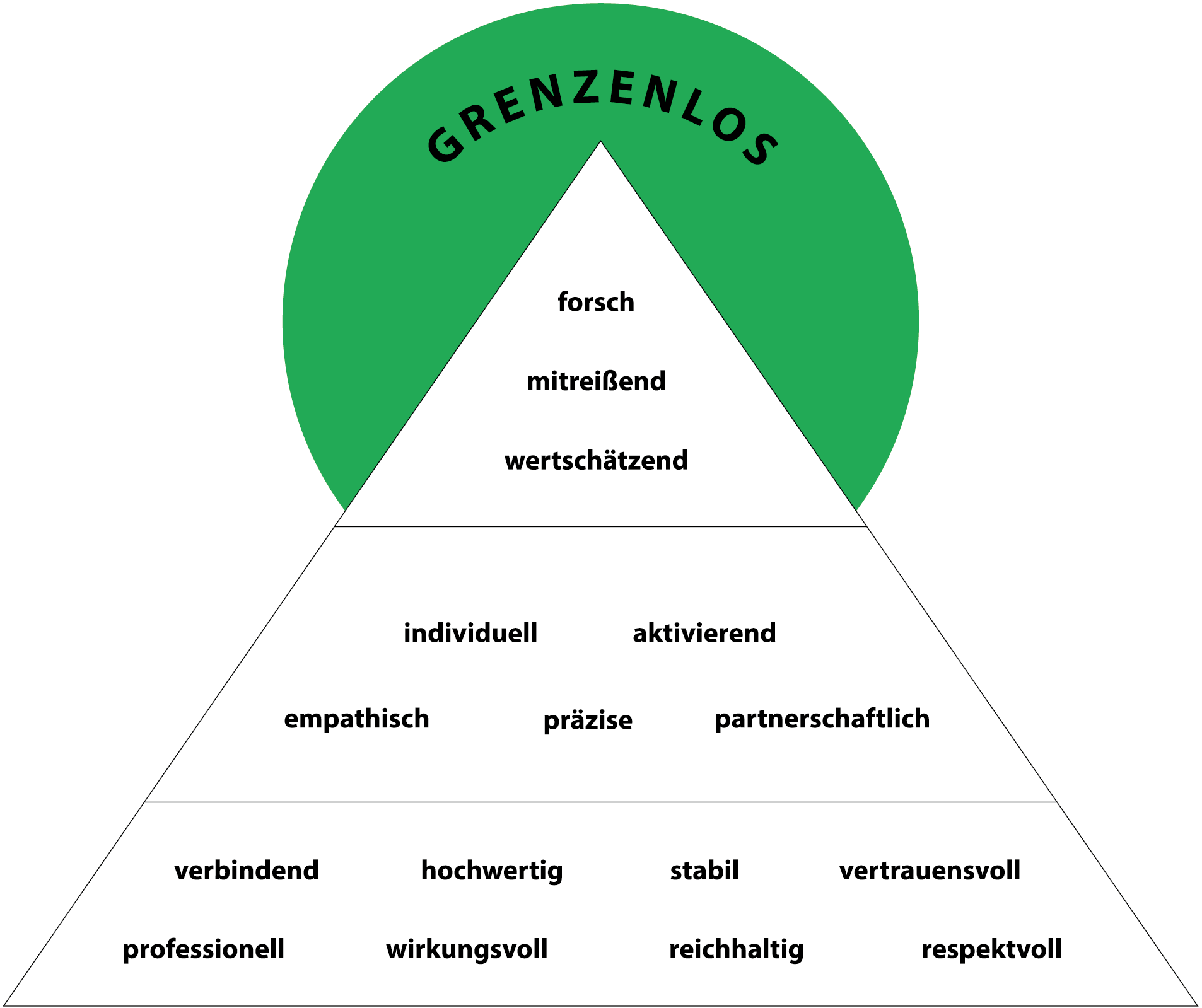
The values developed during the workshop are mapped onto a strategic pyramid, which prioritizes them according to their significance. This hierarchy ensures that the most critical values are emphasized, forming the backbone of the brand. These core pillars serve to differentiate the brand from its competitors and are supported by concise descriptive texts to provide clarity and context.
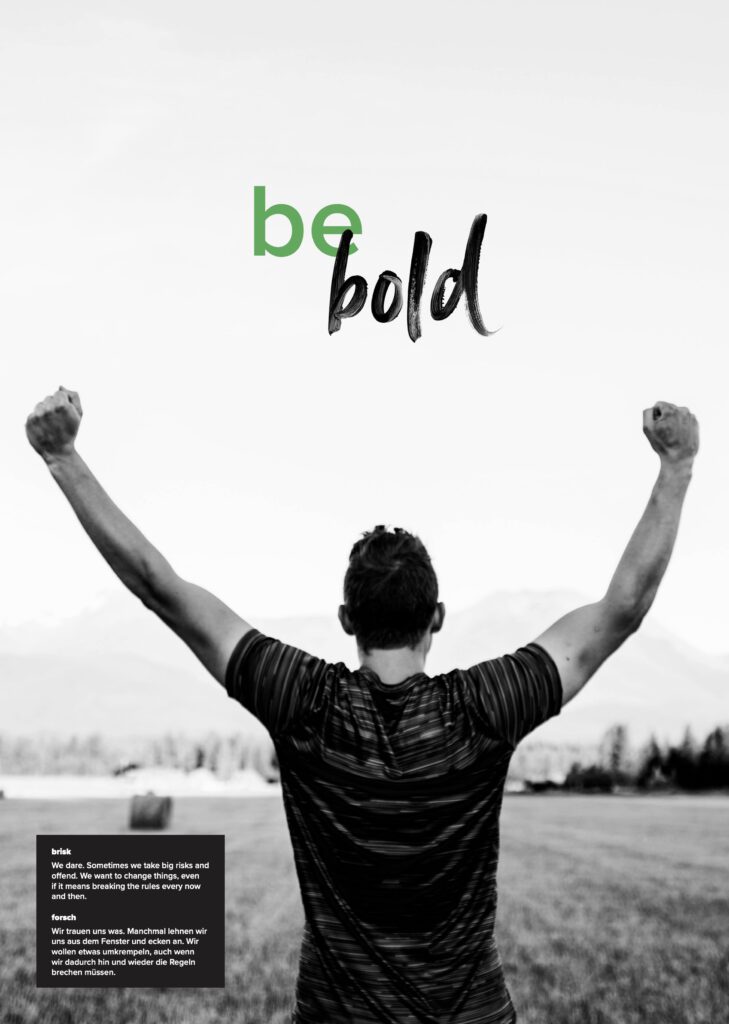
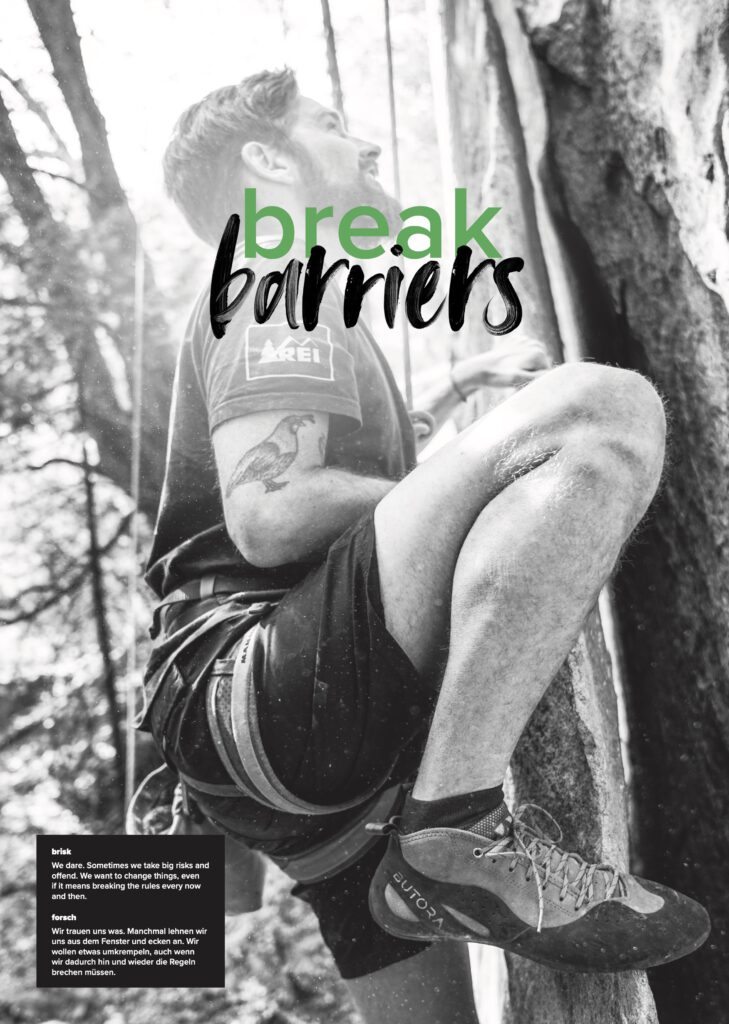
Bold: We aren’t afraid to take risks. Occasionally, we lean out the window and ruffle some feathers. We are here to shake things up—even if it means breaking the rules every now and then.
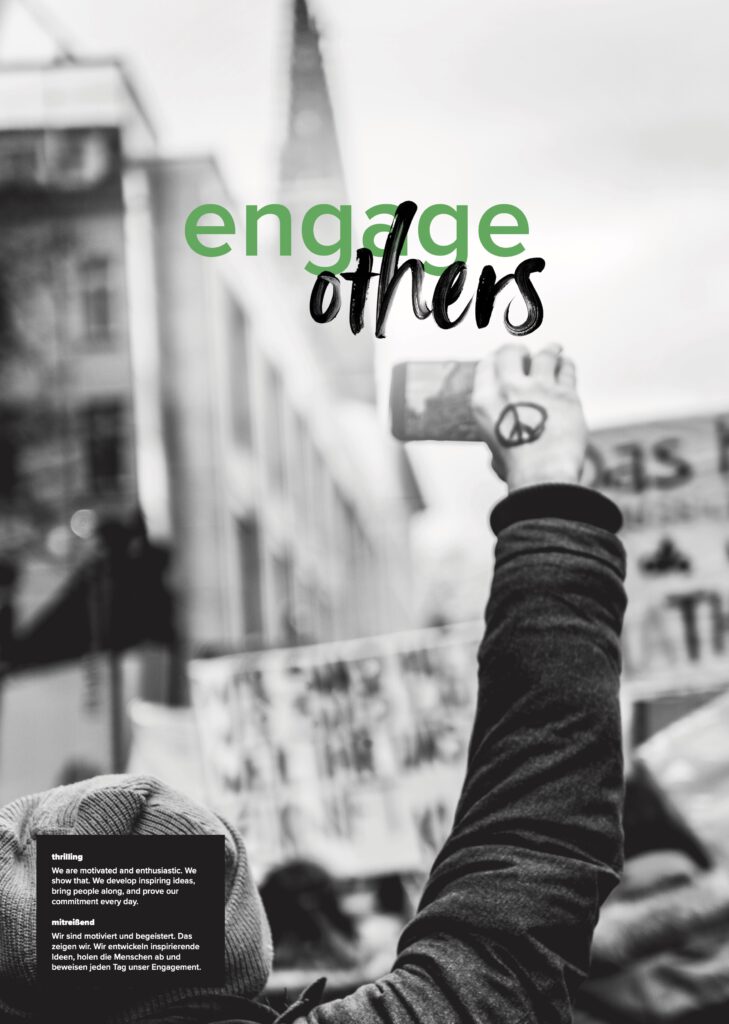
Captivating: Our motivation and enthusiasm are visible in everything we do. We develop inspiring ideas that resonate with people, bringing everyone on board to hit the ground running together.
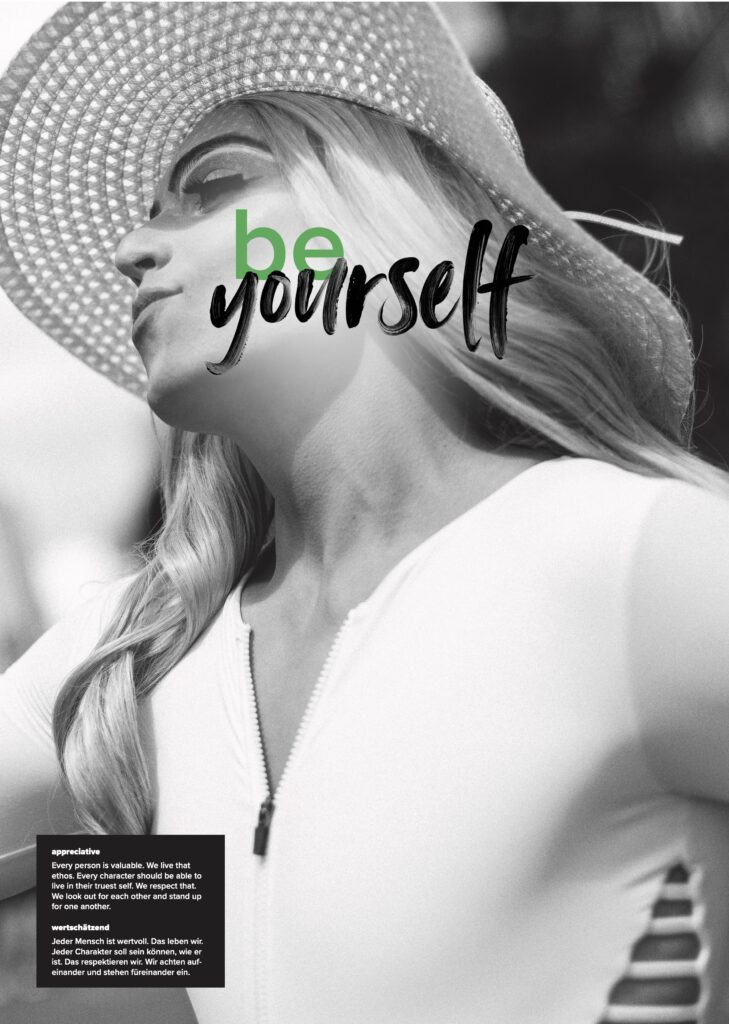
Appreciative: We believe every individual is valuable and we live by that principle. We foster an environment where every personality can be authentic, viewing every unique character as an asset to the team.
Brand Intention
The Brand Intention defines the brand’s fundamental reason for being. It clarifies the company’s long-term vision, its strategic objectives, and the roadmap for achieving them. To uncover these insights, we conduct intensive interviews—primarily with executive leadership. By synthesizing these dialogues with a comprehensive target audience analysis, we assemble the individual pieces into a set of clear, impactful core statements.
Mission: Explains the How – the concrete path and actions taken to realize the vision.
Purpose: Defines the Why – the brand’s underlying motivation and existence.
Vision: Describes the Better World – the aspirational future the company aims to create.


Competitor Analysis
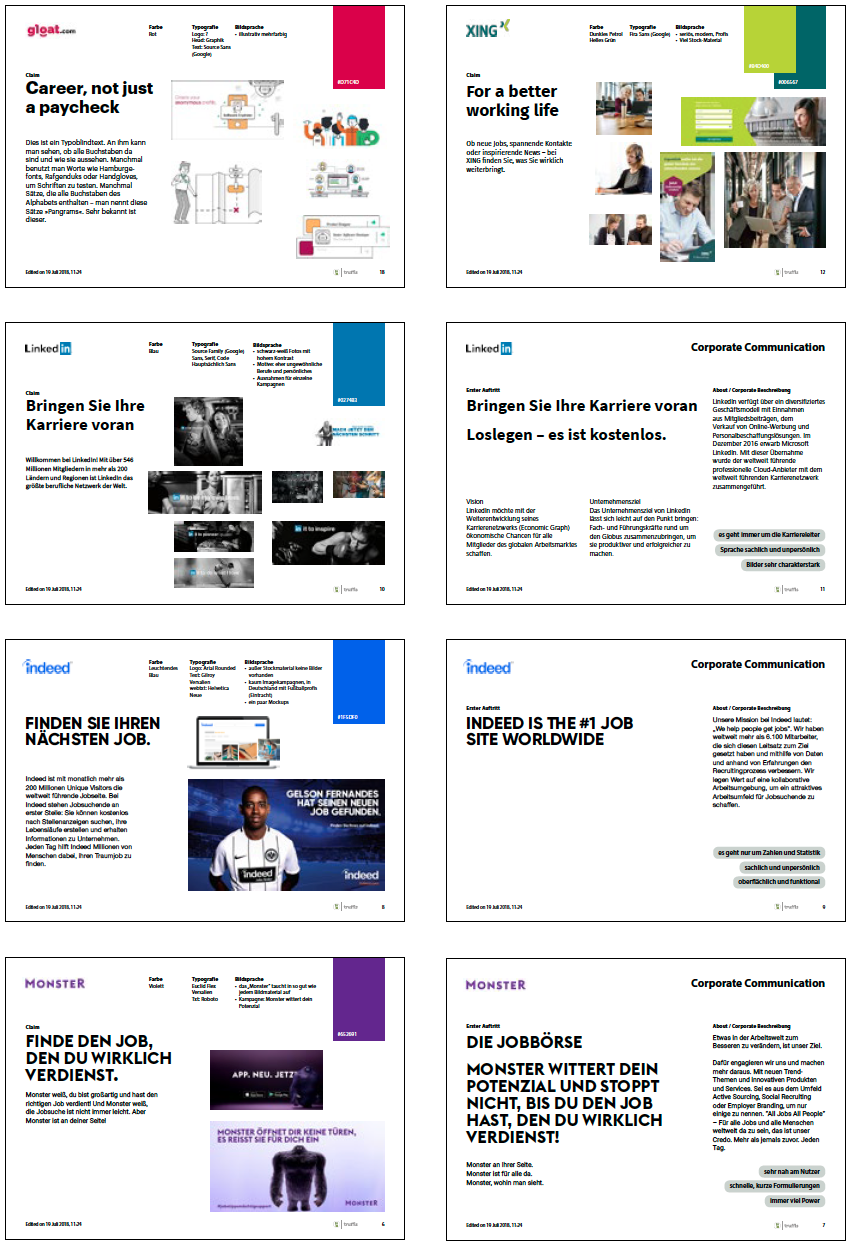
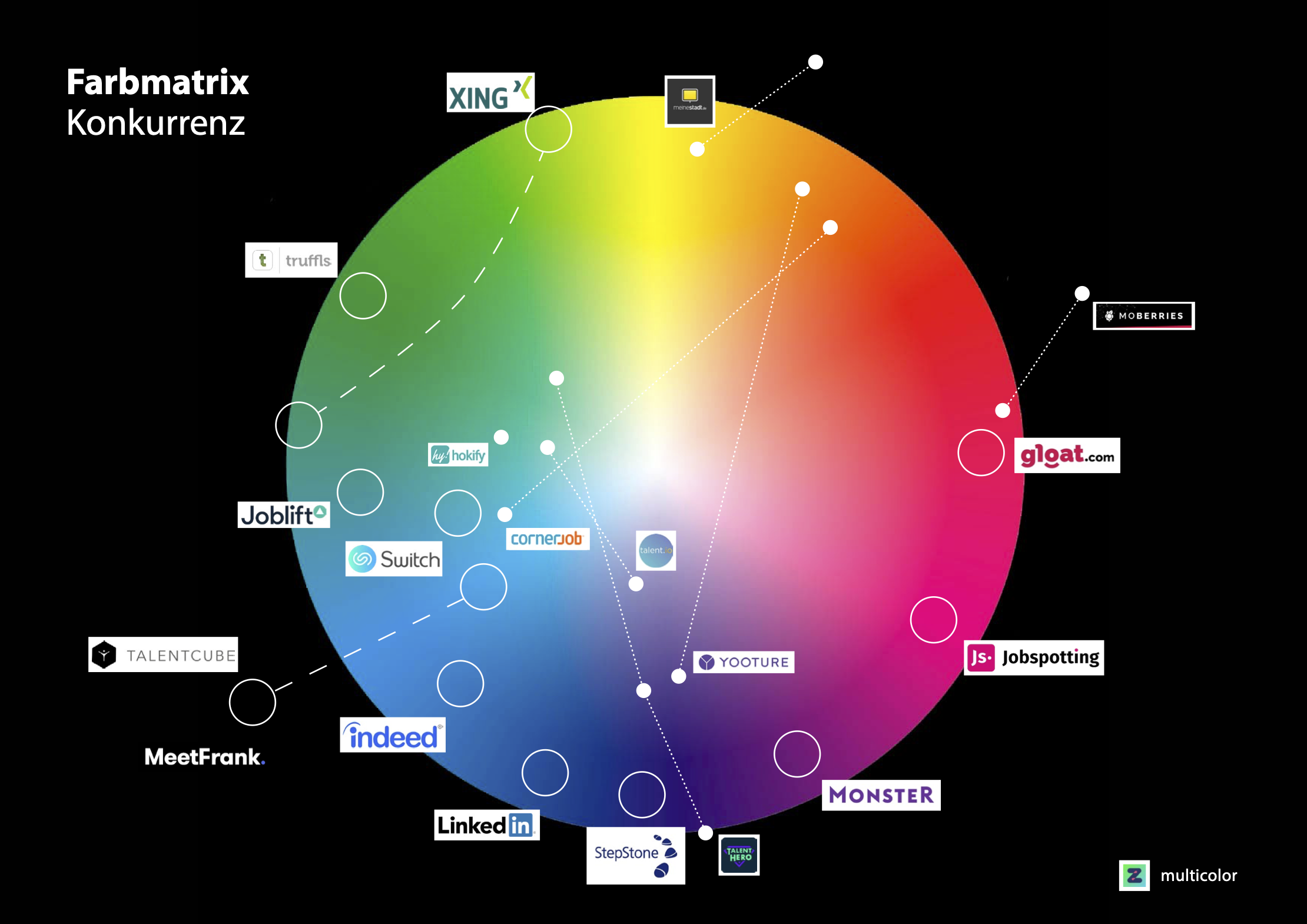
In the next phase, we focus on developing the brand’s visual identity and communication strategy. A deep understanding of the competitive landscape is essential to ensure effective differentiation. We systematically collect and evaluate the designs, tonality, taglines, visual imagery, and core themes of competitors.
By identifying “white spaces” – communicative and visual gaps in the market – we can strategically position the brand to occupy a unique and uncontested territory.

Brand Image
The Brand Image represents the visual essence of the mark. Beyond the core elements of logo, typography, and color palette, we define fundamental design principles and a cohesive visual language. Depending on the specific use case, this framework can be expanded to include various additional brand assets.
Ultimately, the goal is to develop all the necessary components at the time of branding to consolidate the brand’s visible elements into a unified visual form – one that is equipped to assert itself effectively in the marketplace.
Strategic Brand Approach: ”The Catalyst for Change“
The brand concept for truffls is centered on the idea of being a high-energy disruptor in the digital HR market. It moves away from the static nature of traditional recruitment and positions itself as a dynamic force for progress.
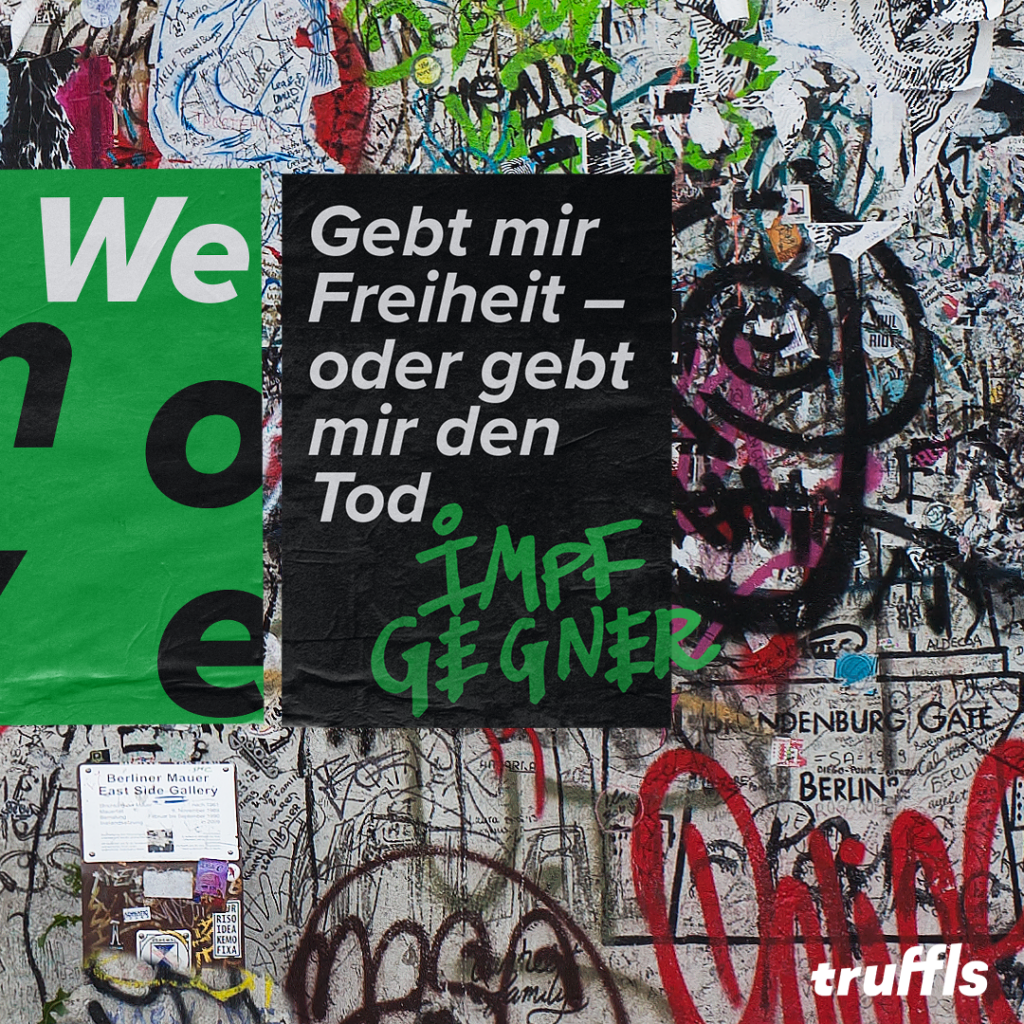
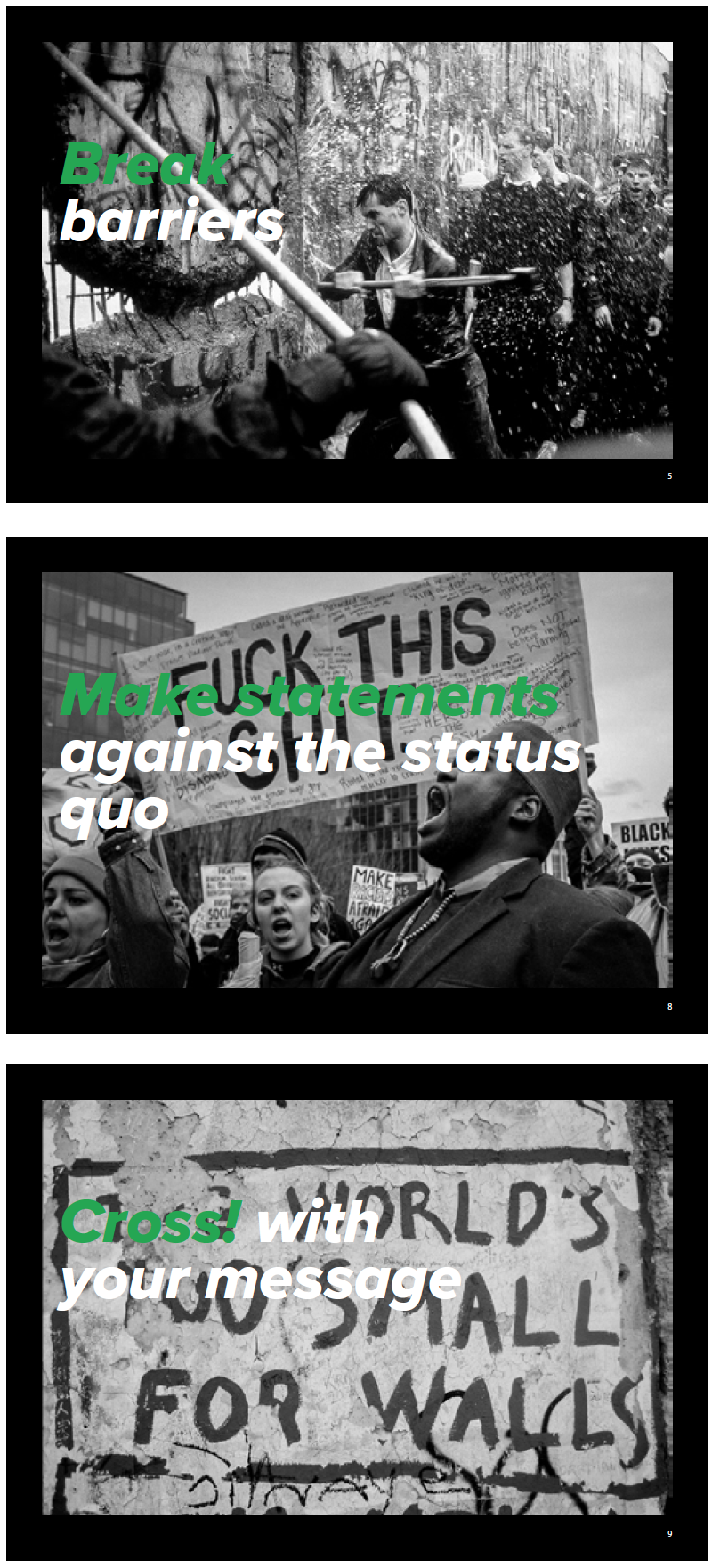
Mission-Driven Visuals: The concept utilizes high-impact, provocative imagery – such as historical moments of protest and barrier-breaking – to communicate that the brand is about more than just job matching; it is about empowerment and movement.
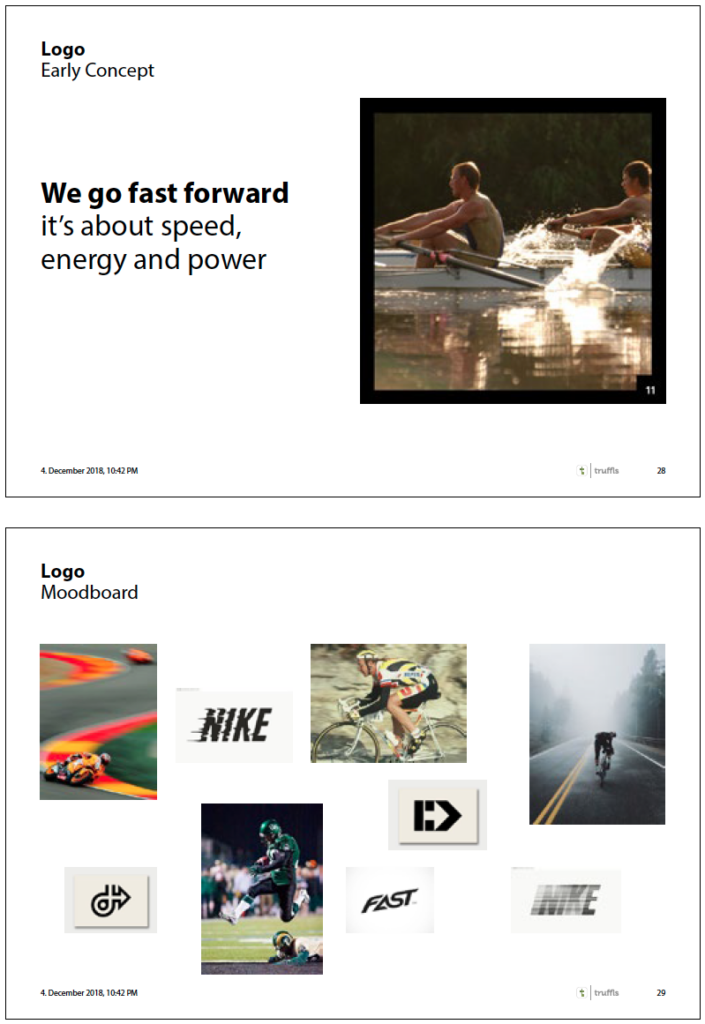
The “Forward” Mentality: The core concept is built around the ”fast forward“ mindset, emphasizing speed, energy, and power in the recruitment process.
Challenging the Status Quo: The brand is designed to “break barriers” and “make statements against the status quo,” positioning it as a tool for those who want to overhaul existing rules and shake up the industry.
Logo
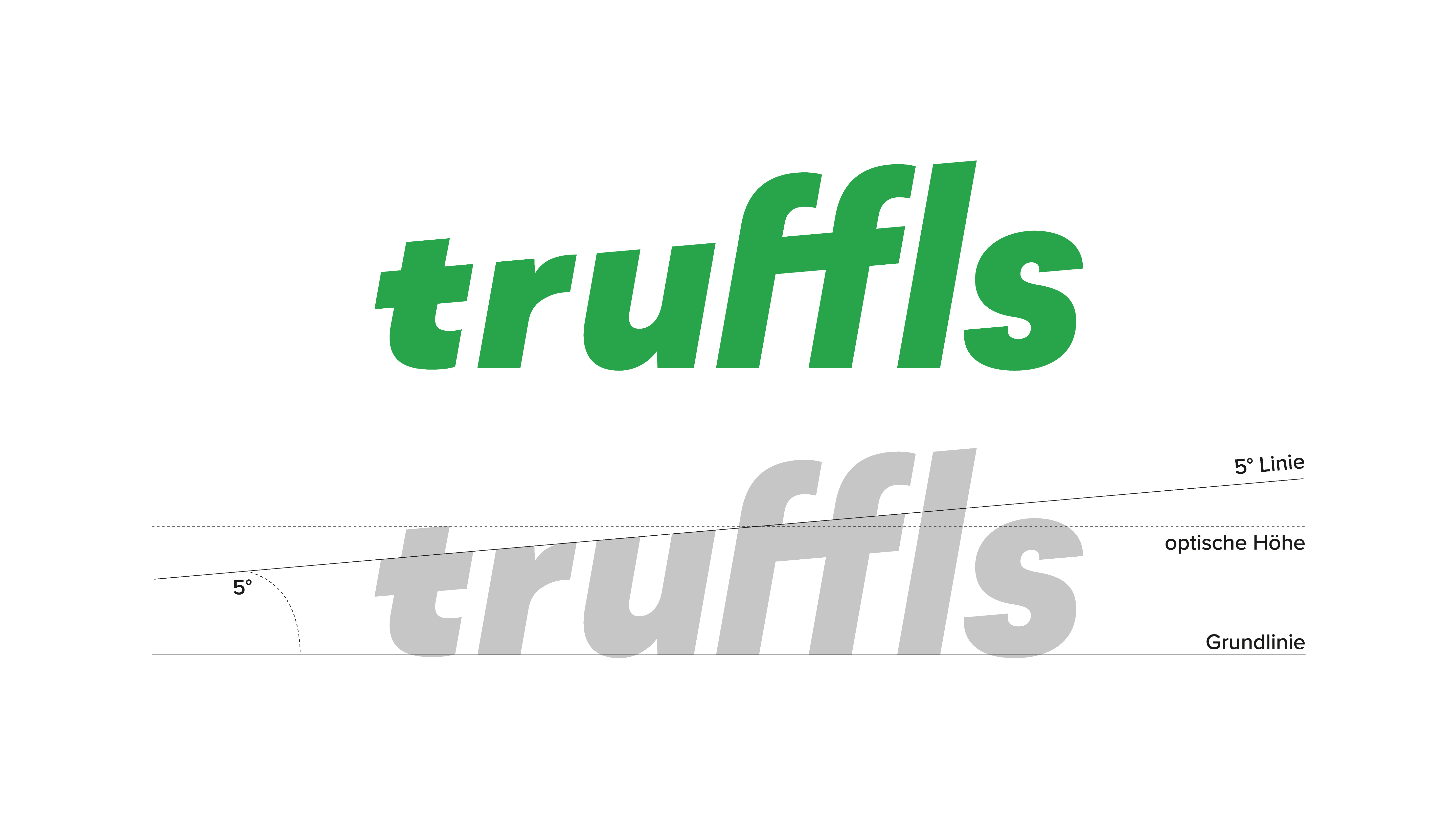
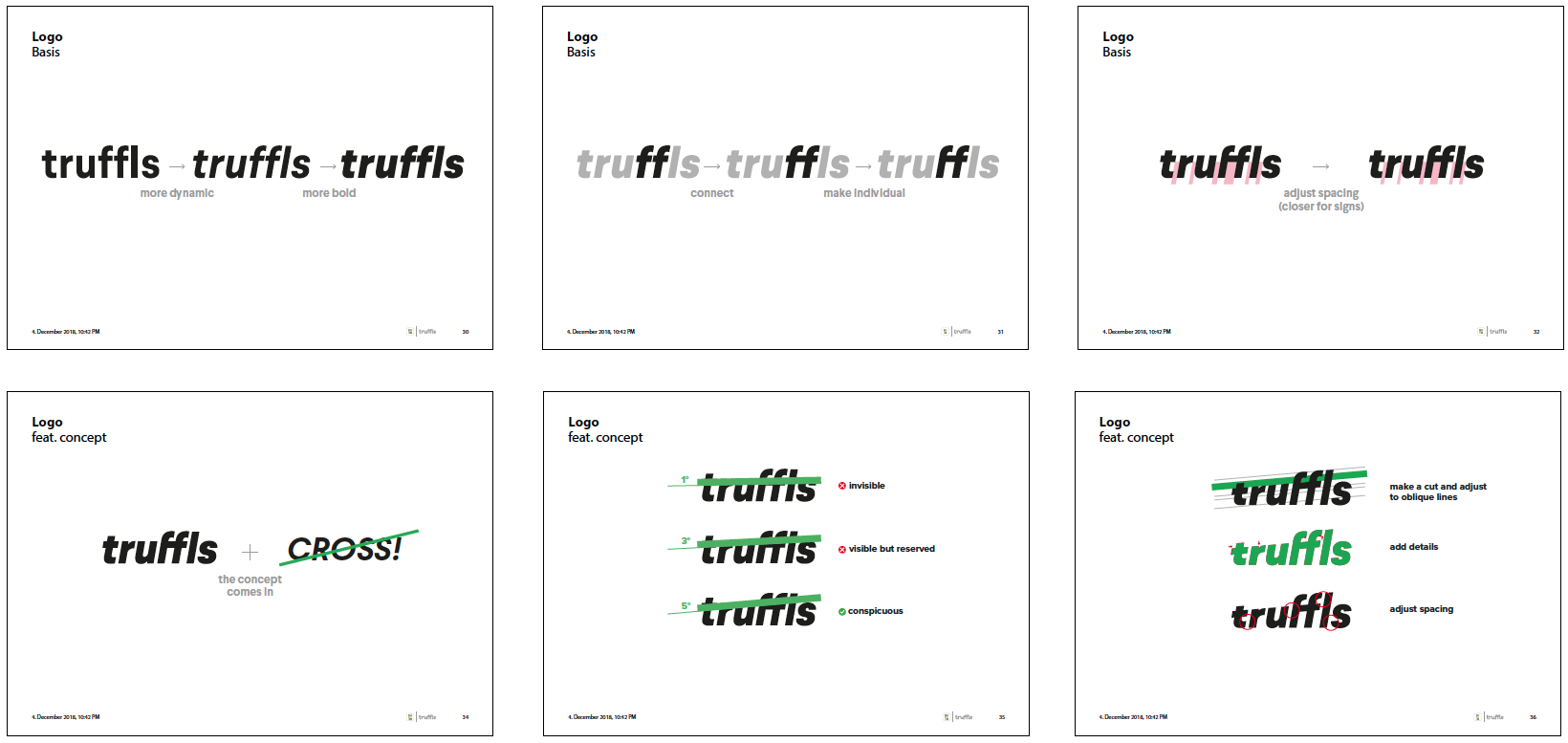
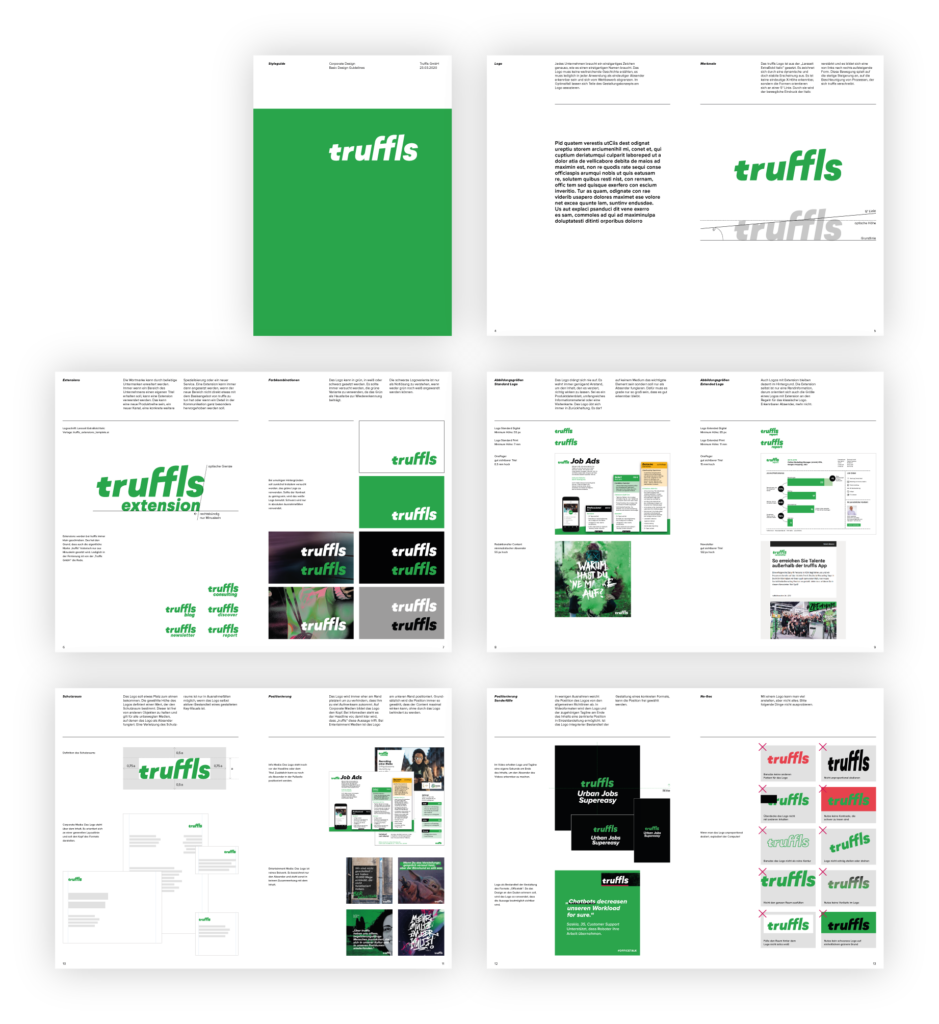
Every company requires a unique symbol, just as it requires a unique name. A logo does not necessarily need to tell an extensive story; its primary function is to serve as a clear, unmistakable signature across all applications while ensuring distinct differentiation from competitors. Ideally, the logo should subtly evoke key elements of the broader design concept.

Color
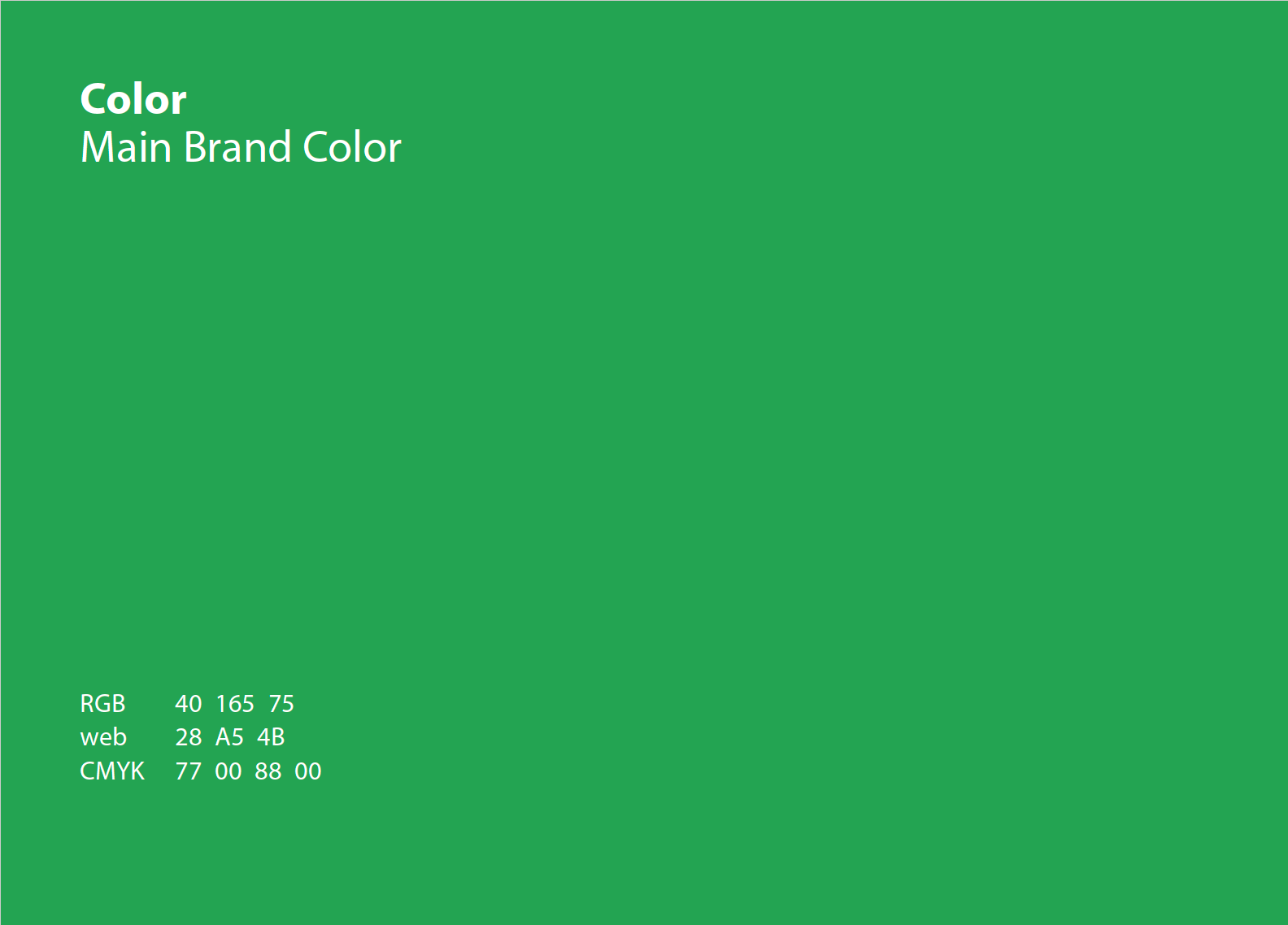
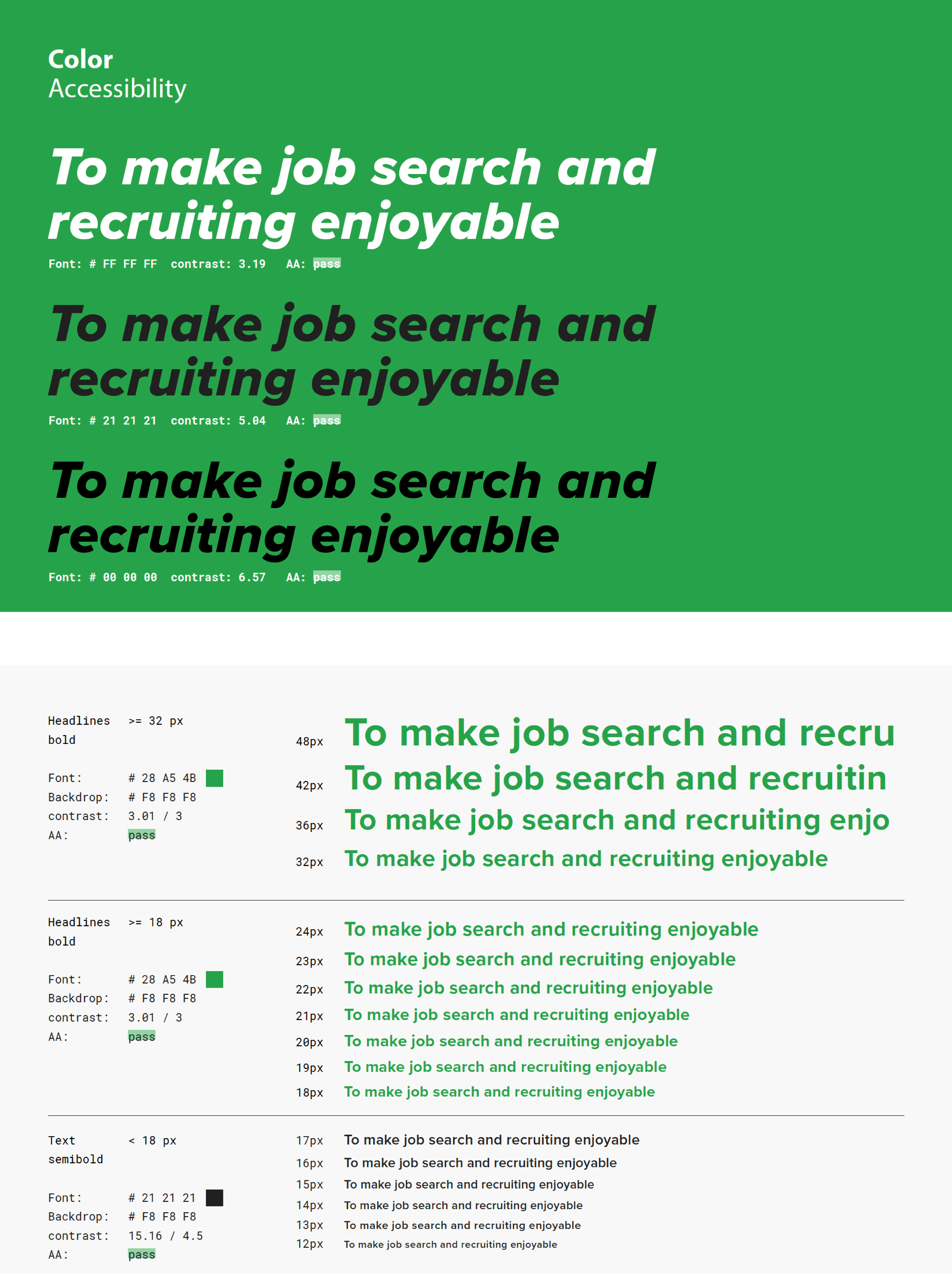
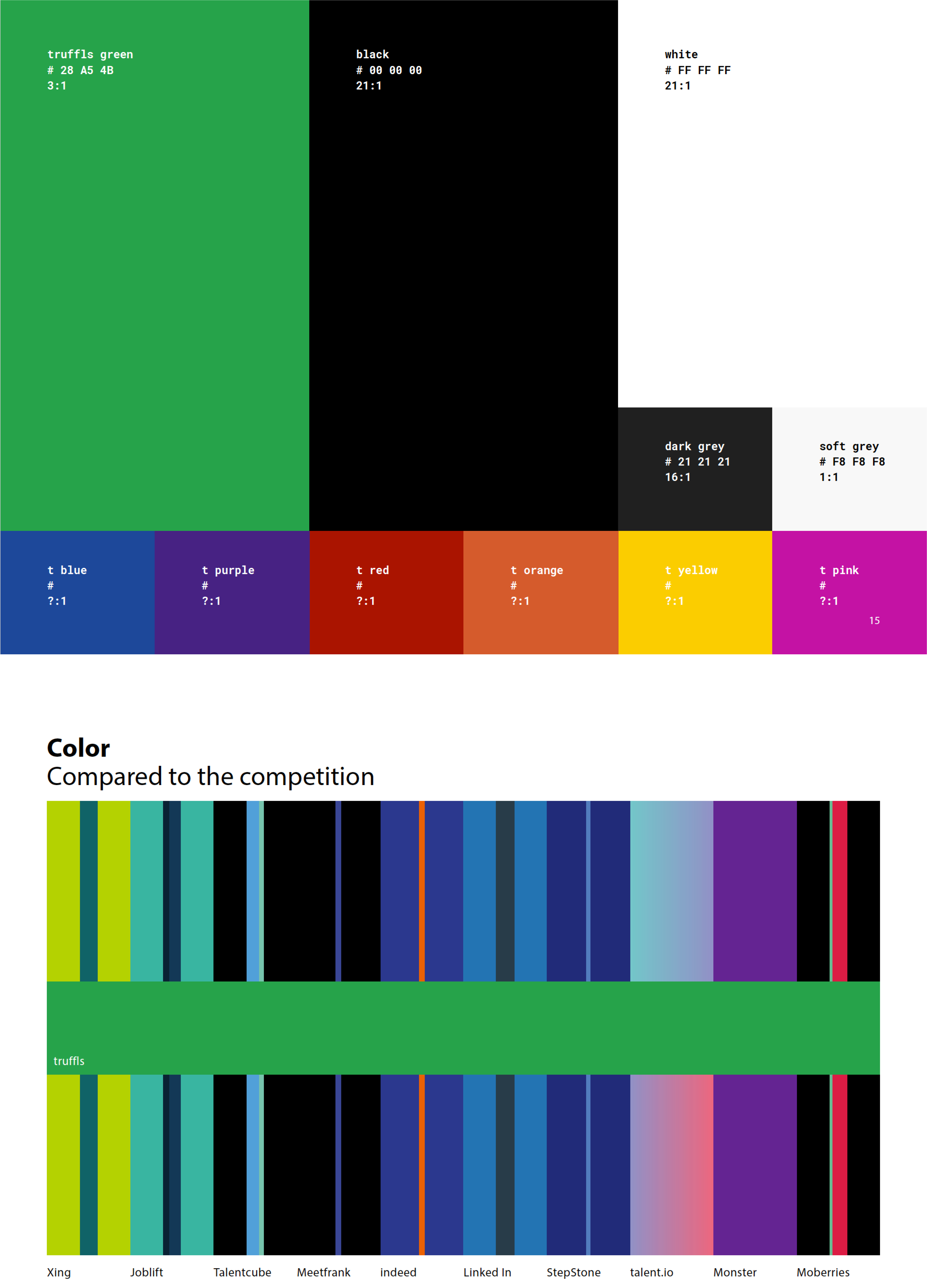
Guided by the color matrix developed during the competitor analysis, we define a primary brand color. In the context of a brand redesign, existing colors are often retained or subtly refined to maintain brand equity. In certain cases, color selections must also meet specific accessibility standards (WCAG).
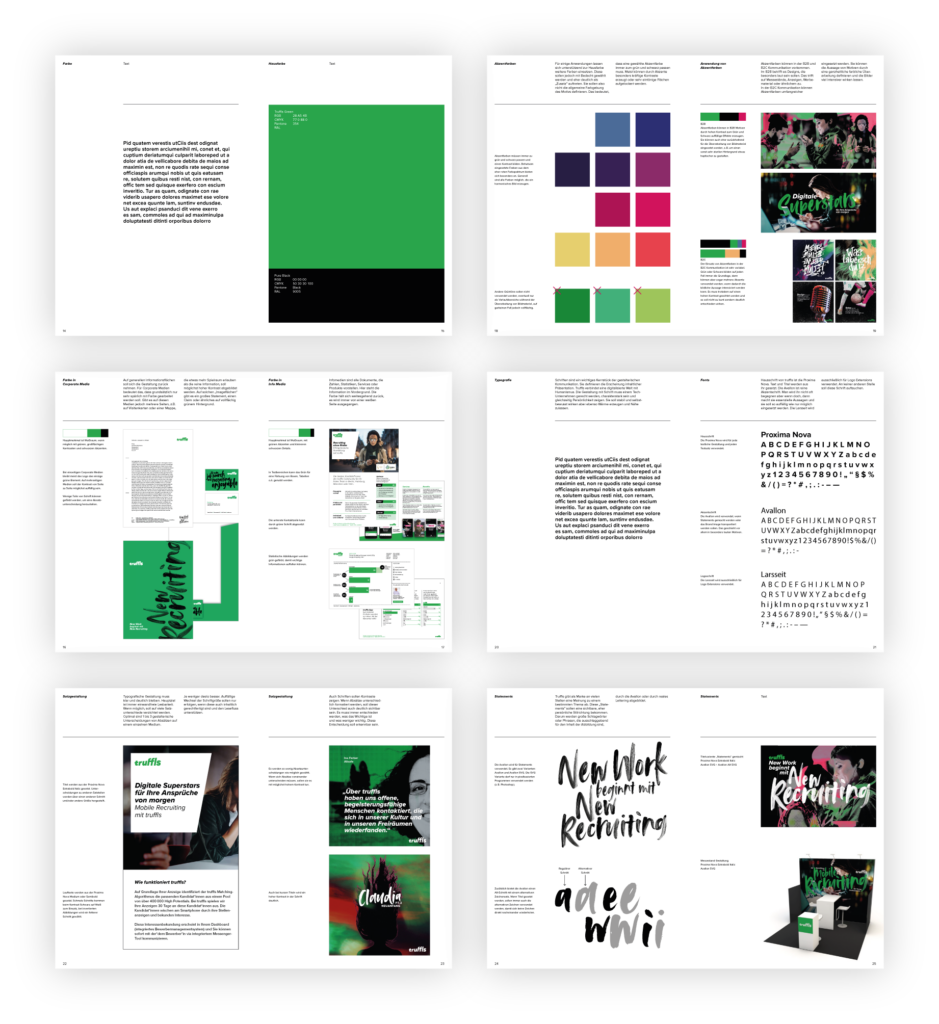
The ultimate priority, however, is to ensure the color is both distinctive and impactful, allowing the brand to command attention in a crowded market. Further details regarding accent colors and the interplay of the palette within the broader visual identity are codified in the Brand Style Guide.
Typography
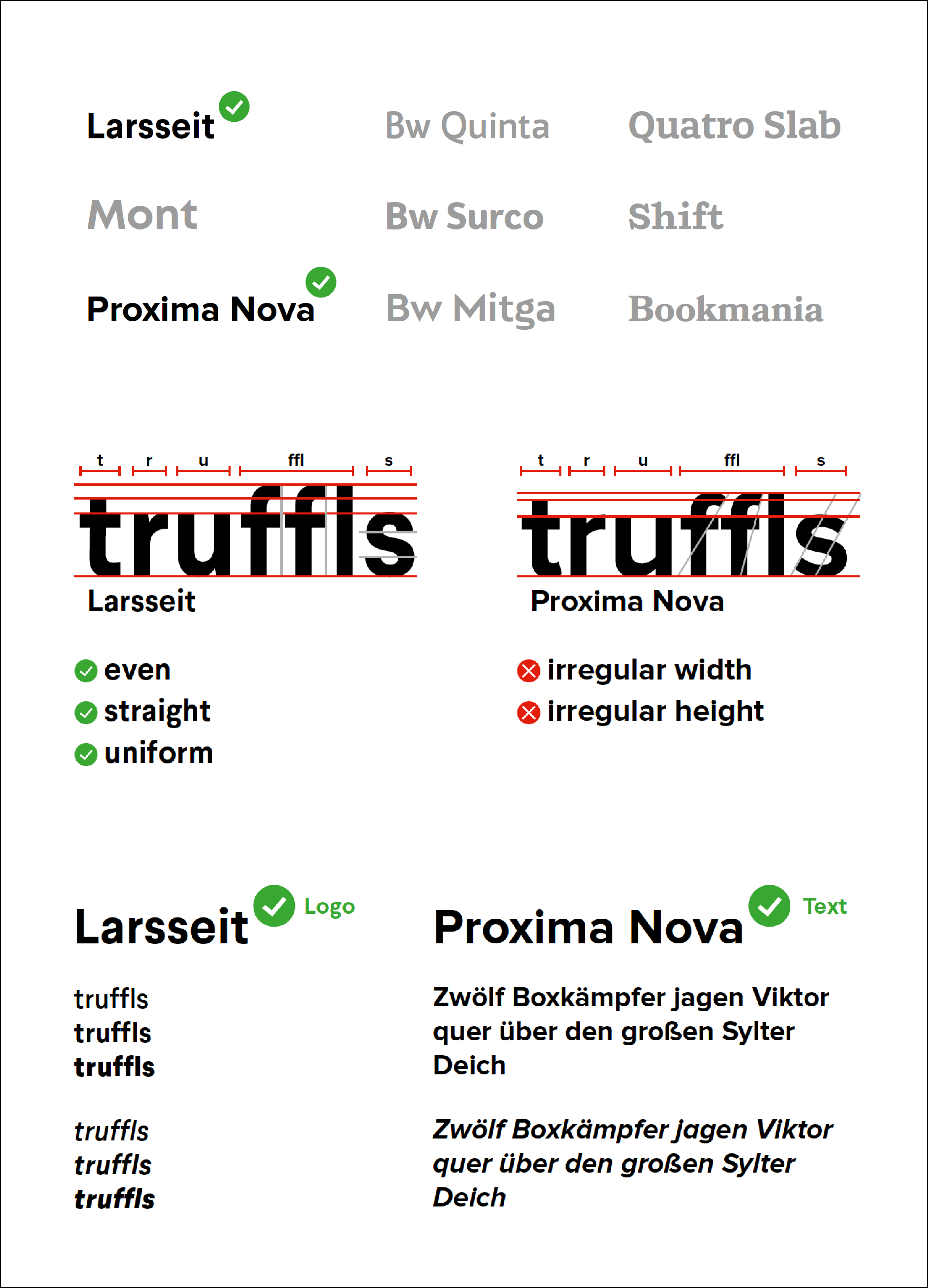
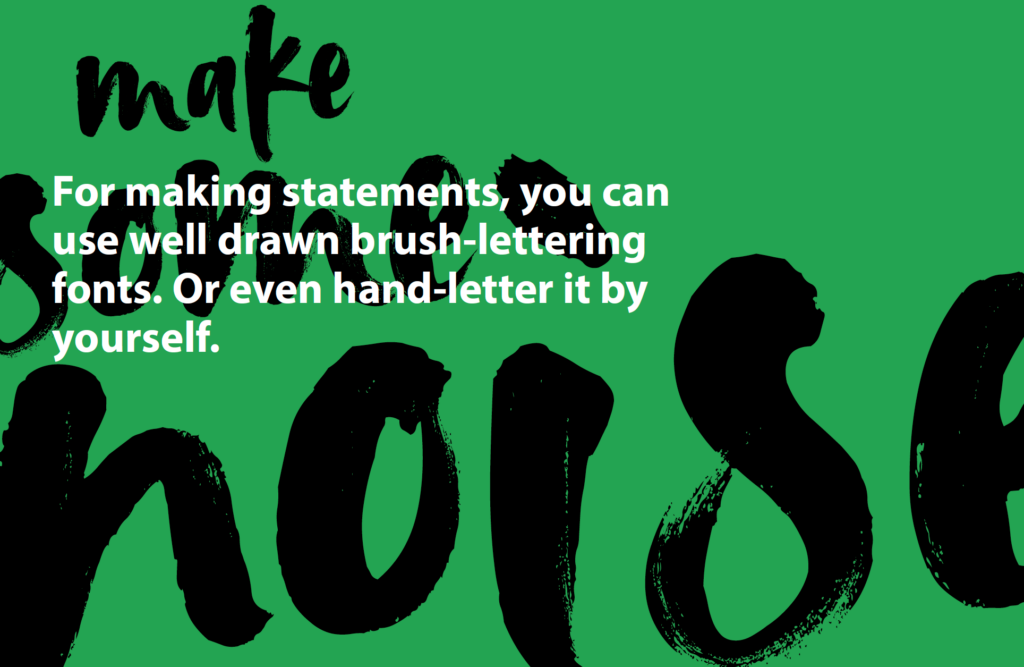
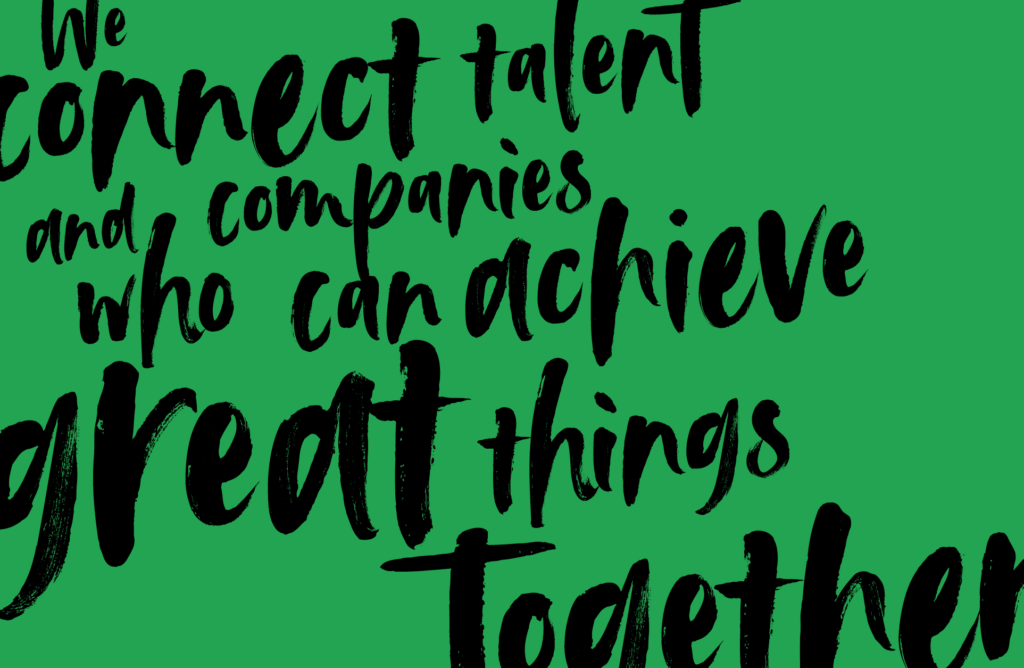
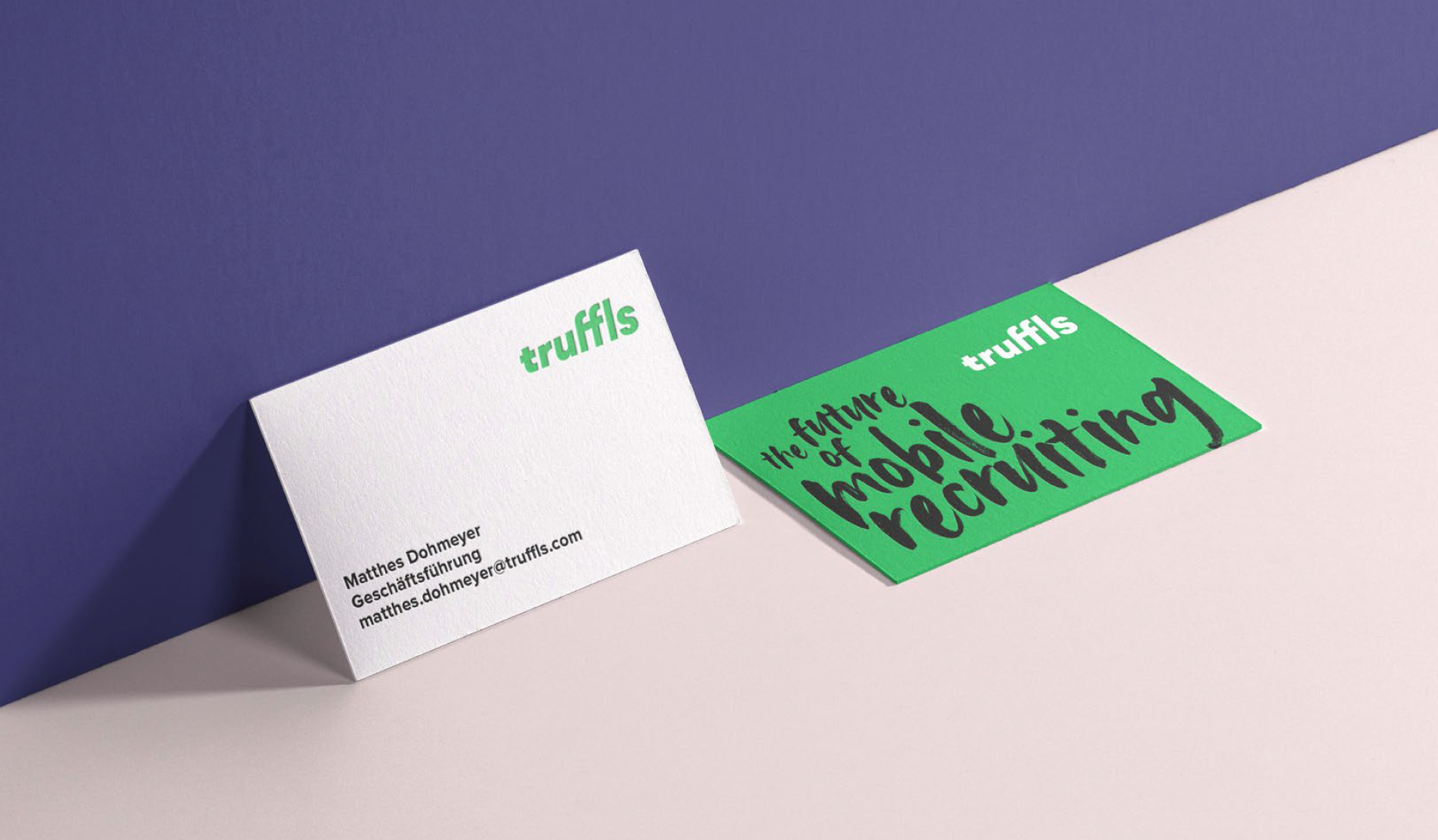
The right typography makes the Brand Core tangible within the overall visual identity. To ensure the selection is objective and strategic, we once again apply our Brand Filters. Various typefaces are evaluated against these predefined criteria to determine which best embodies the brand’s character. The final specifications and usage rules are then detailed within the Brand Style Guide.
Imagery
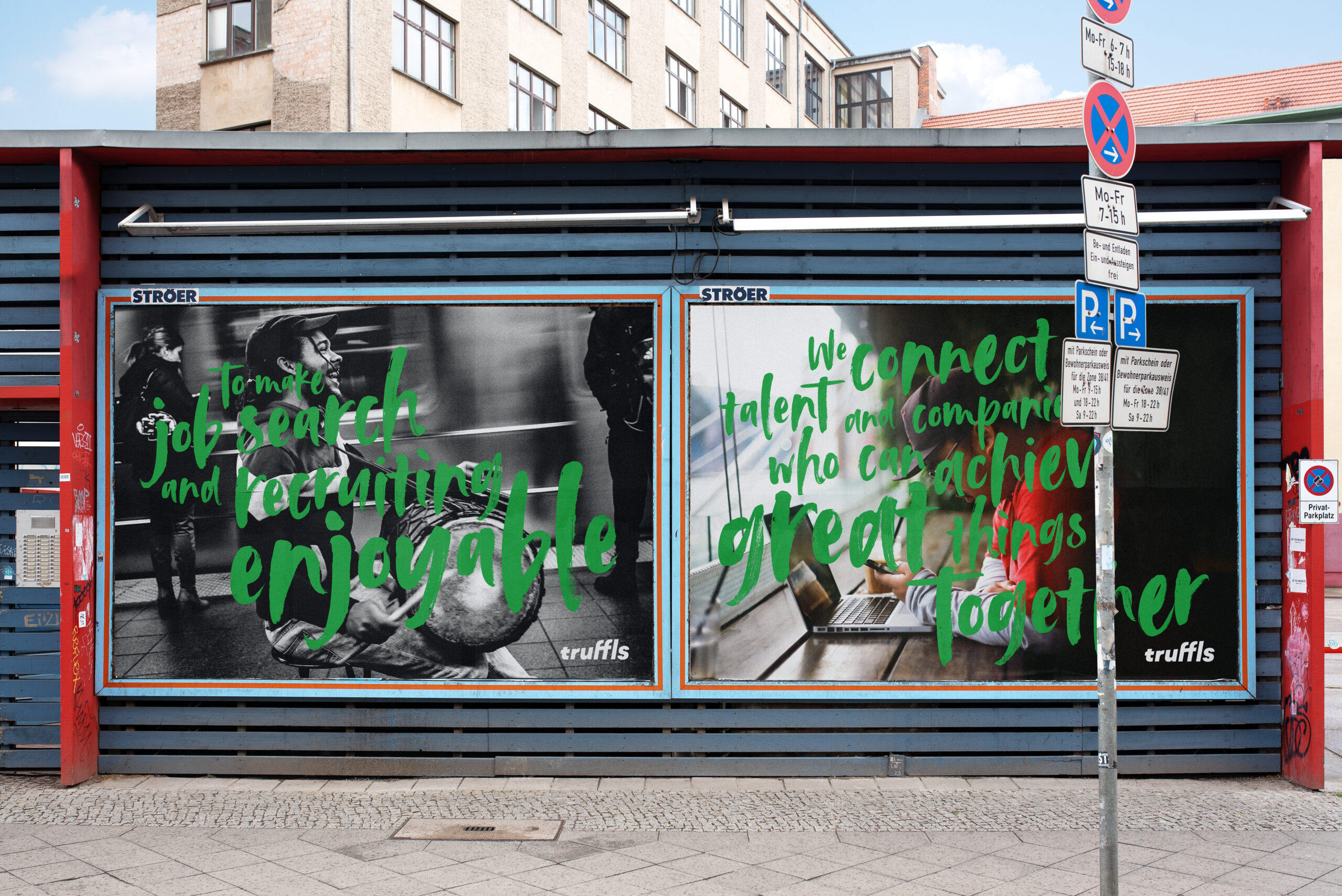
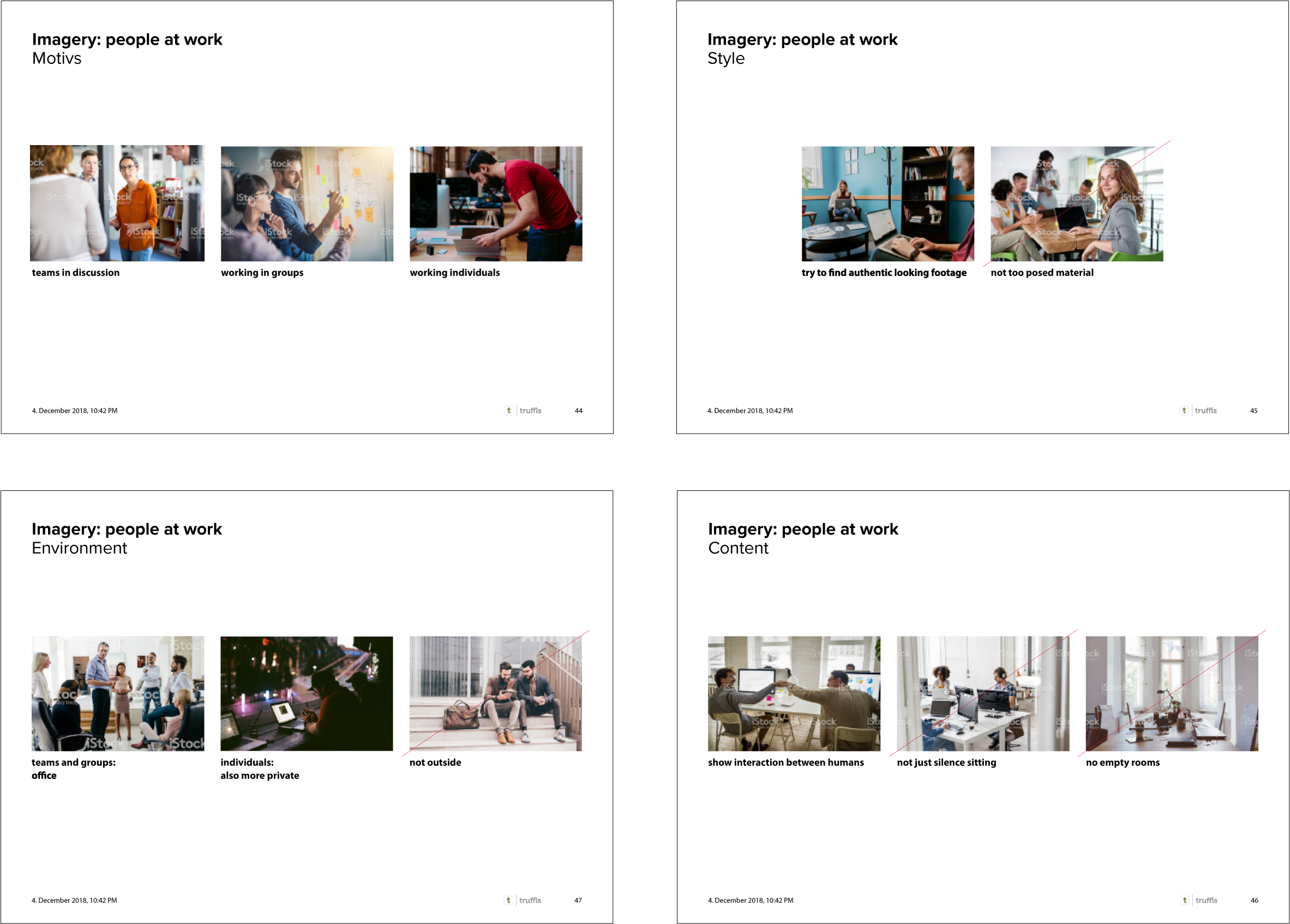
The right imagery often embodies the brand more powerfully than a logo ever could. Our Visual Language framework defines exactly what type of photographic or illustrative material is suitable for each specific channel.
We establish rigorous guidelines for subject matter, style, content, environment, perspective, focus, and eye contact. In cases where distinct image sets are required—tailored to different channels or target audiences—we provide specific strategic recommendations for each individual series.




Style Guide
The complete Brand Identity is documented in a comprehensive Style Guide to ensure seamless practical application. This serves as a central reference point, ensuring that all visual and communicative elements remain consistent and professional across every internal and external touchpoint.
Brand Offering
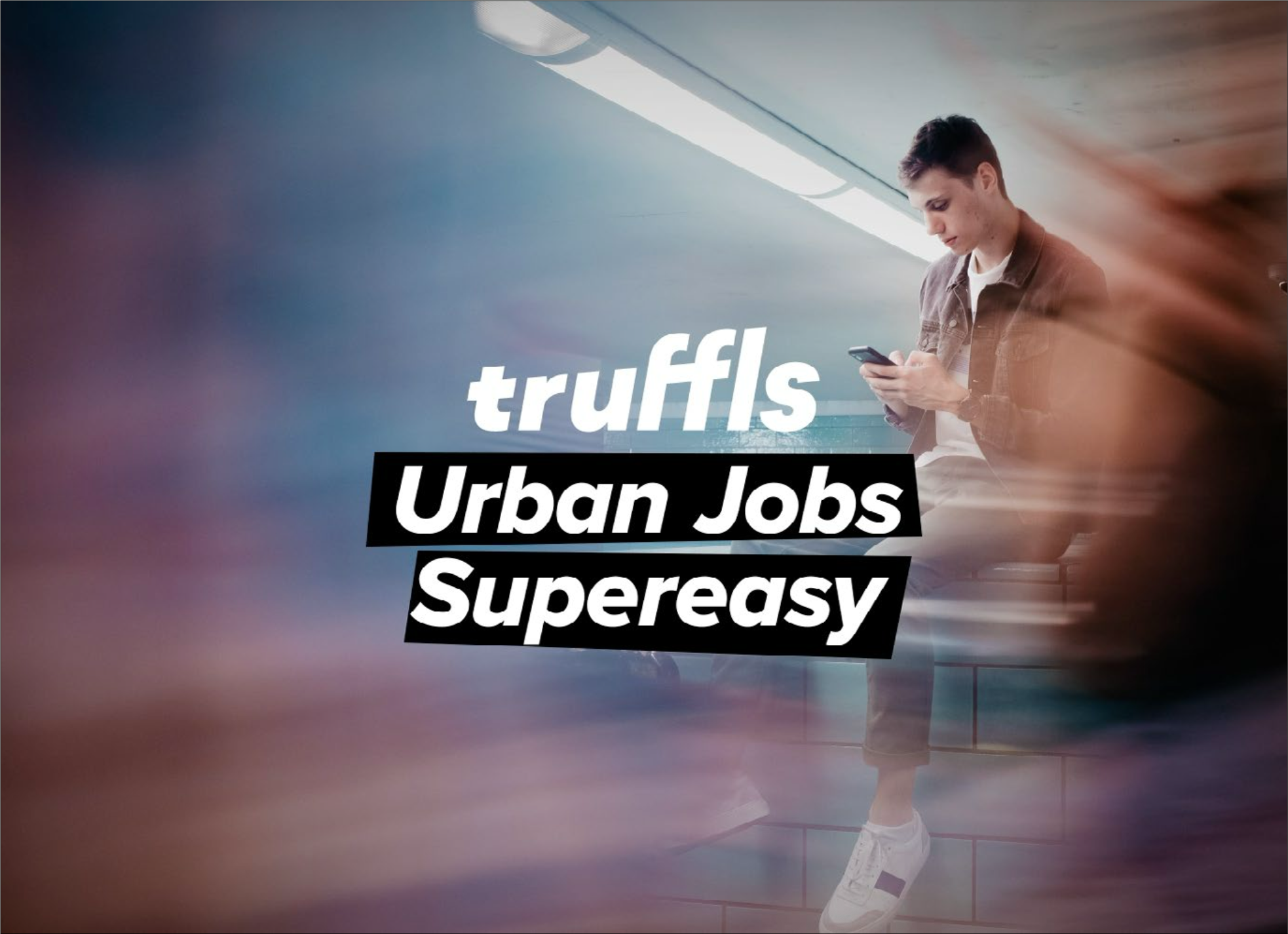
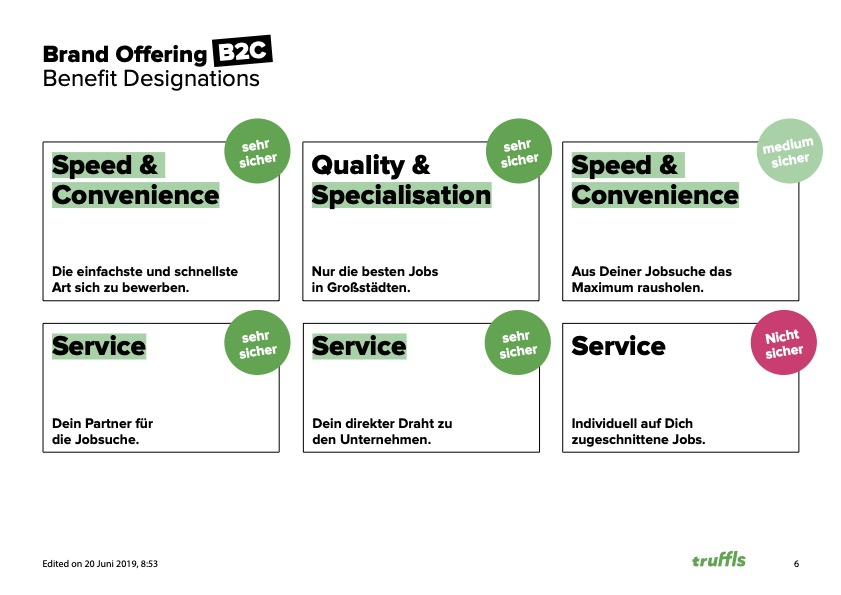
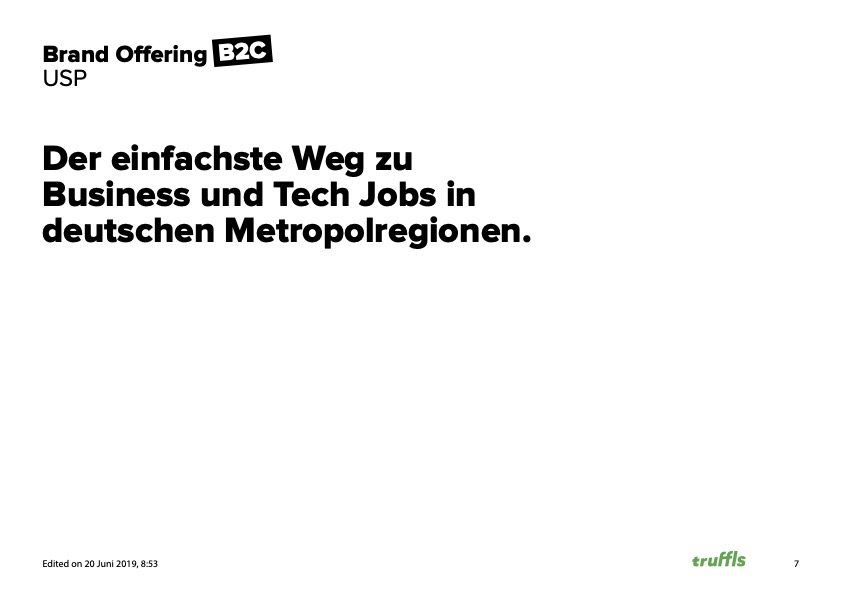
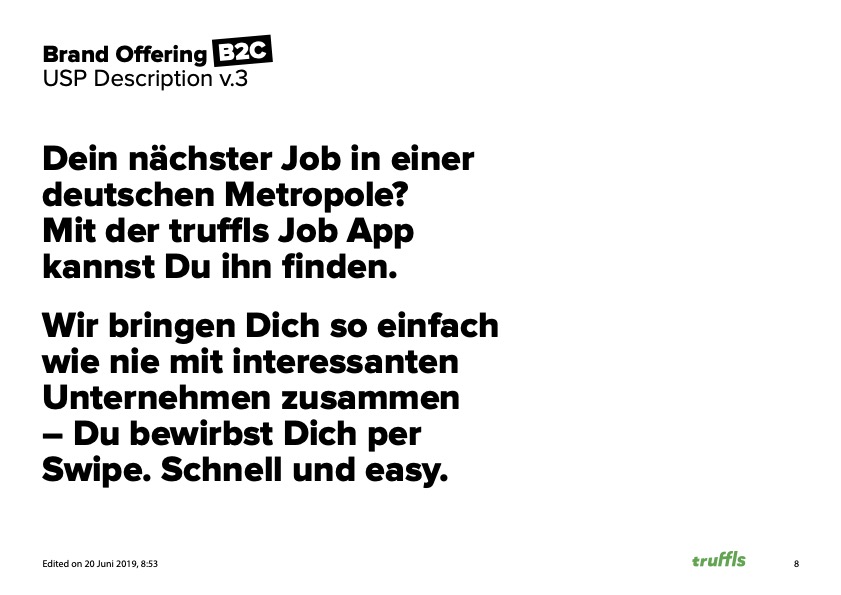
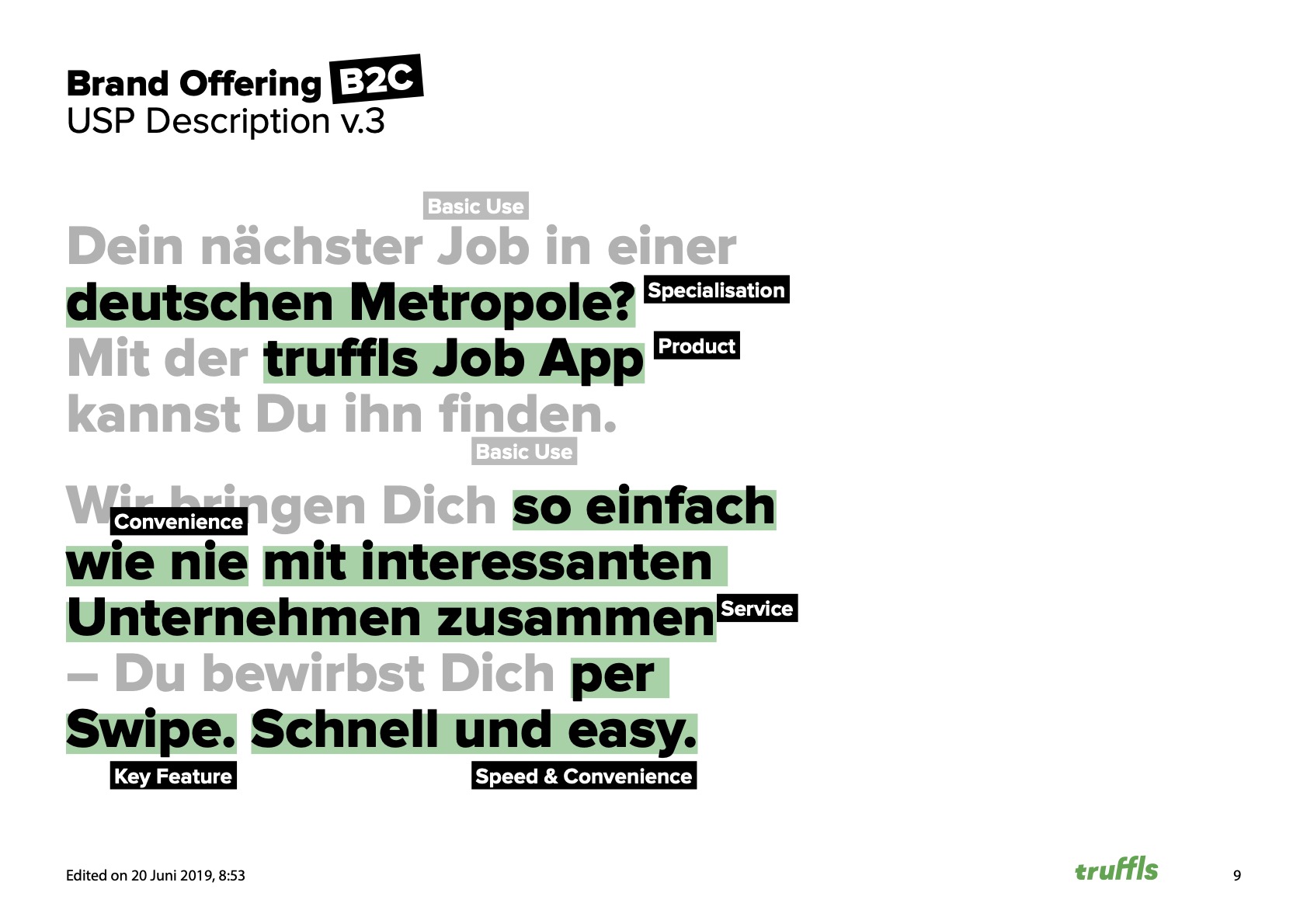
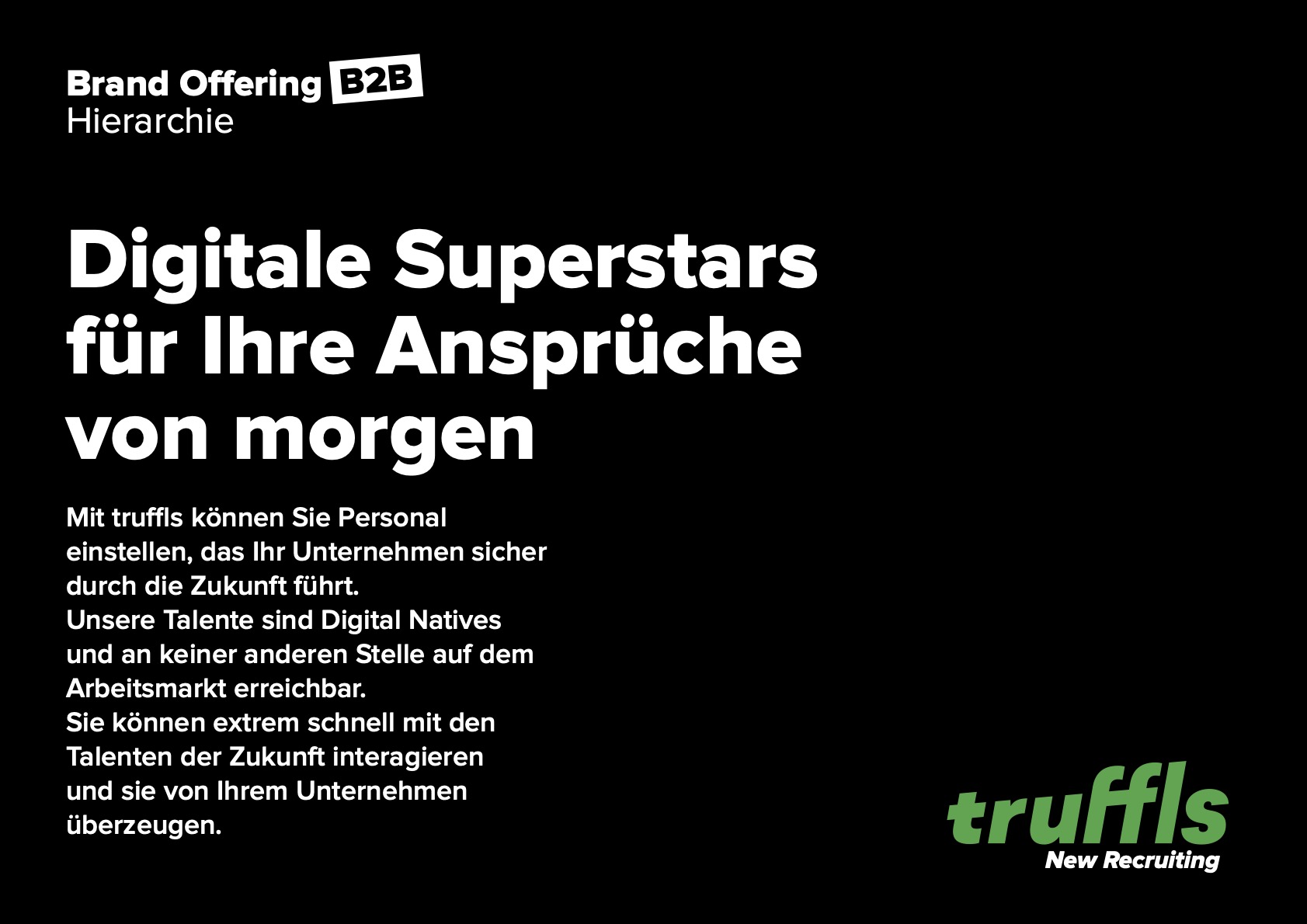
In this phase, we identify the specific benefits of the products and directly address our customers’ needs and aspirations. We clearly define the Unique Selling Proposition (USP) and craft compelling copy that highlights the brand’s competitive advantages.
By applying this Brand Offering to all communication materials, we ensure that the brand’s essential promise is articulated consistently and persuasively across every touchpoint.
Designing for multiple segments
In branding, companies often manage multiple products targeting distinct customer segments. For each of these products, a dedicated Brand Offering must be developed, as the specific value propositions vary significantly depending on the audience. In the case of truffls, the strategy is split between two primary products:
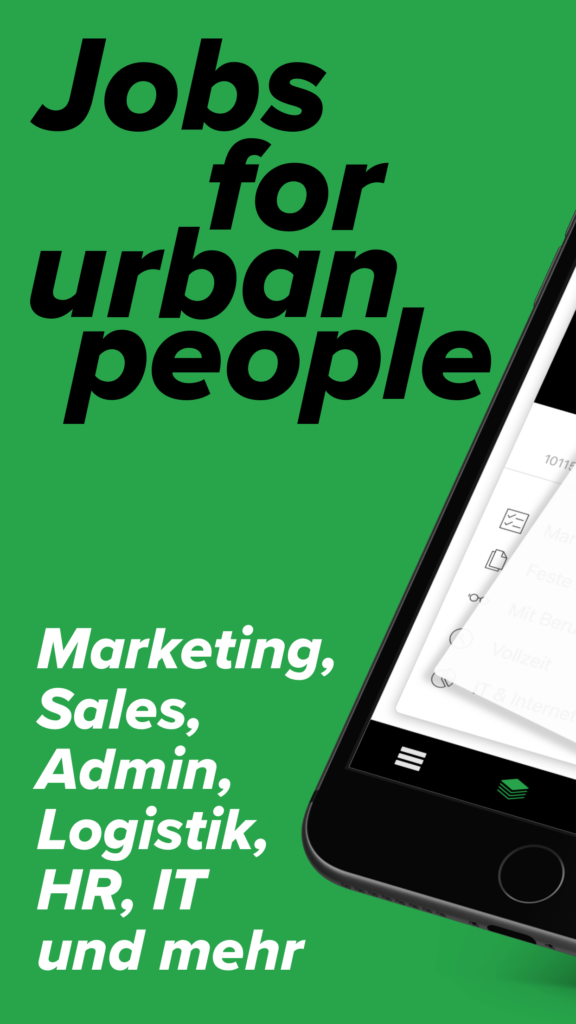
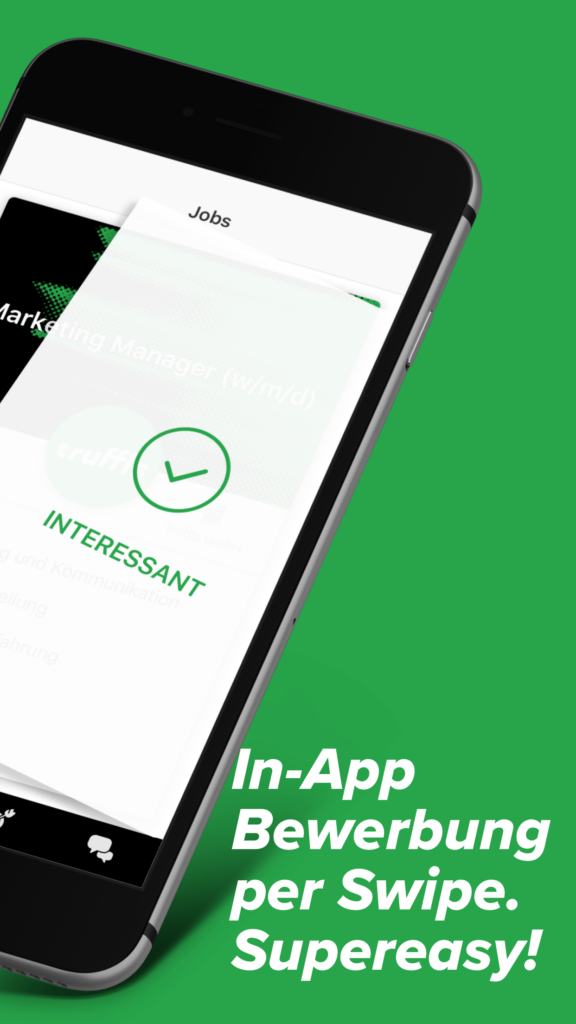
- The Job App: A B2C product focused on driving downloads and user engagement.
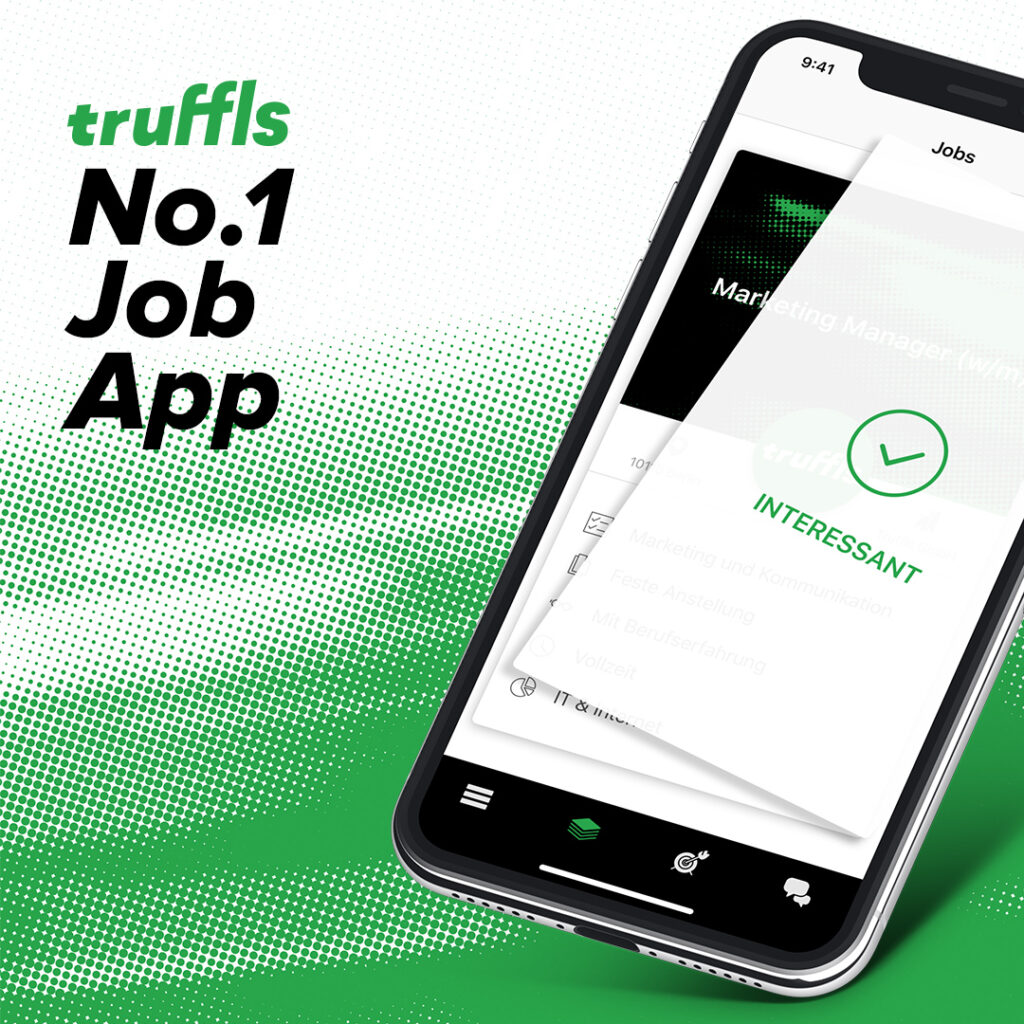
- Job Postings: A B2B product focused on selling recruitment space to employers.

Brand Behavior
Companies often interact with their customers and employees in vastly different ways depending on the situation. Brand Behavior establishes a clear set of principles to navigate these interactions. At its core, this framework defines the ethical standards and moral values the brand upholds.
Codifying these behaviors is essential for building a resilient Employer Brand and provides a strategic foundation for discovering and telling the brand’s most authentic stories.

Principles
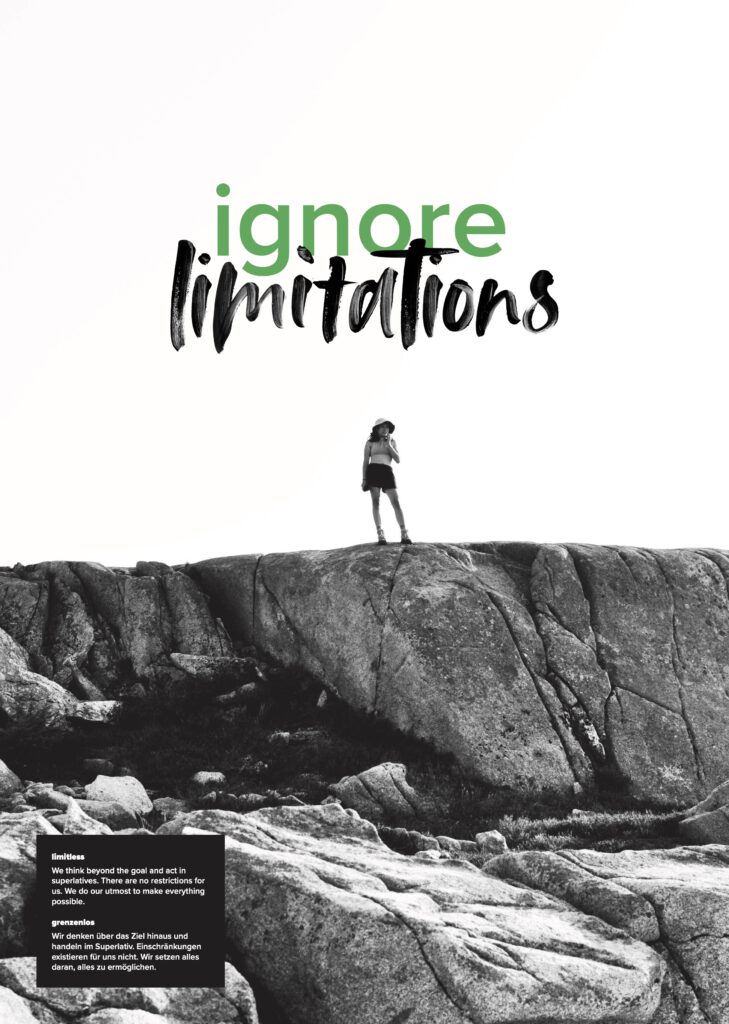
Beyond the product itself, a brand must define what it stands for and the fundamental principles that guide its actions. To build a resilient Employer Brand, it is essential that both employees and customers clearly understand how the brand’s character manifests in real-world behavior.
To ensure these values are lived authentically within the organization, we translate abstract principles into actionable guidelines. In the case of truffls, this was achieved through:
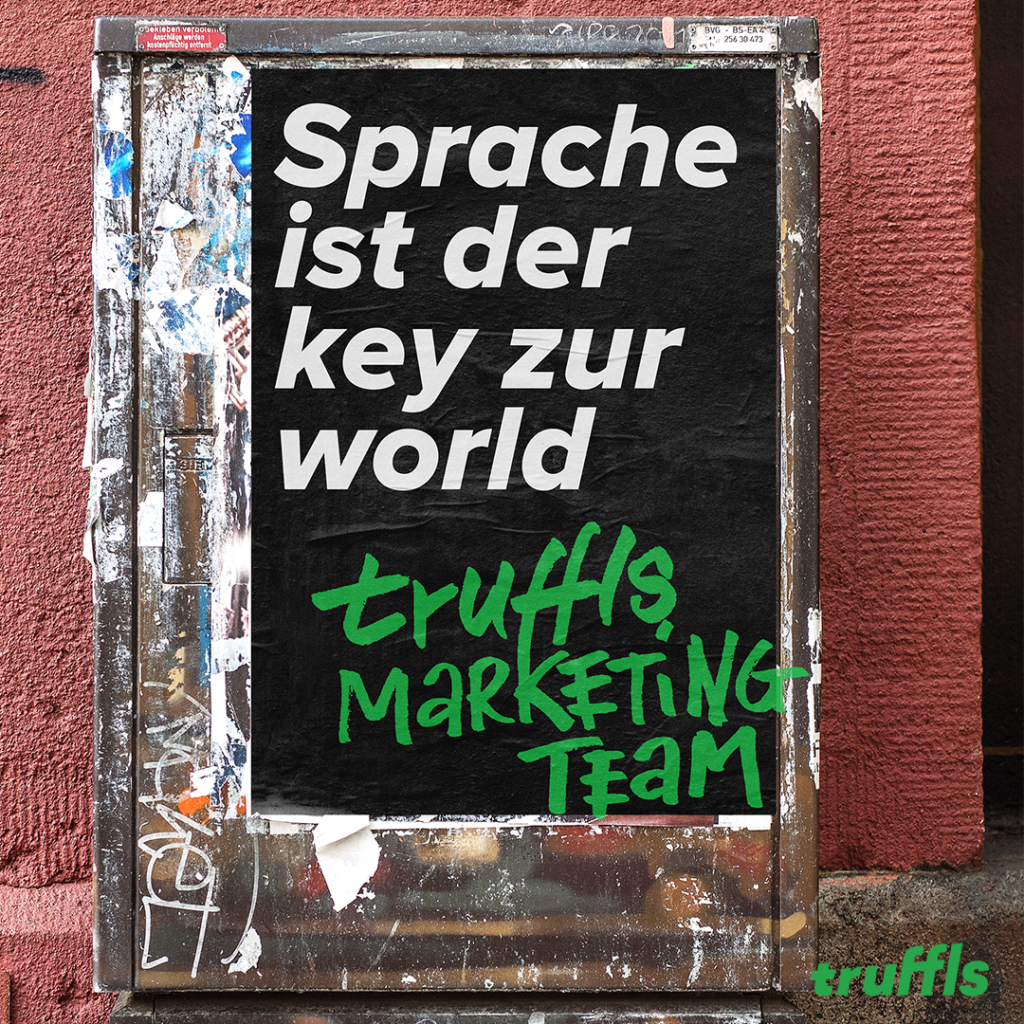
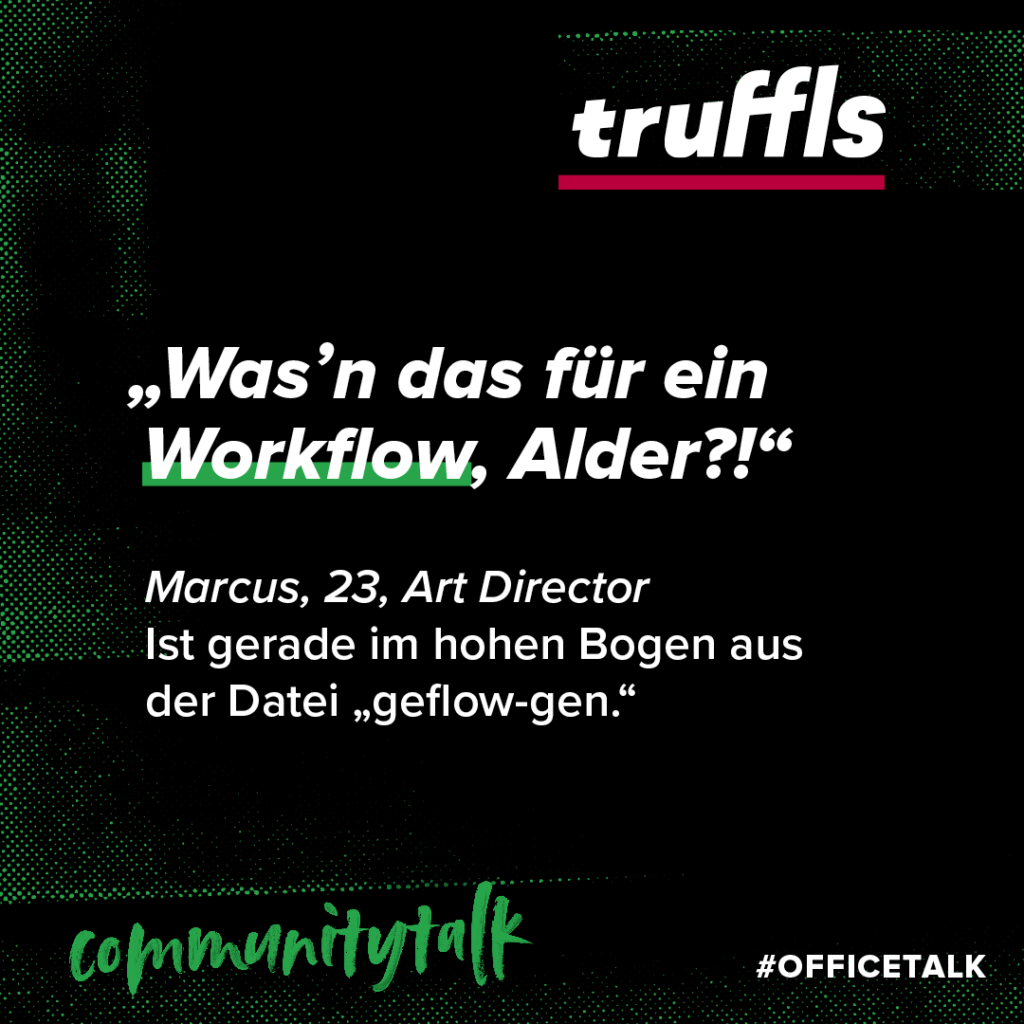
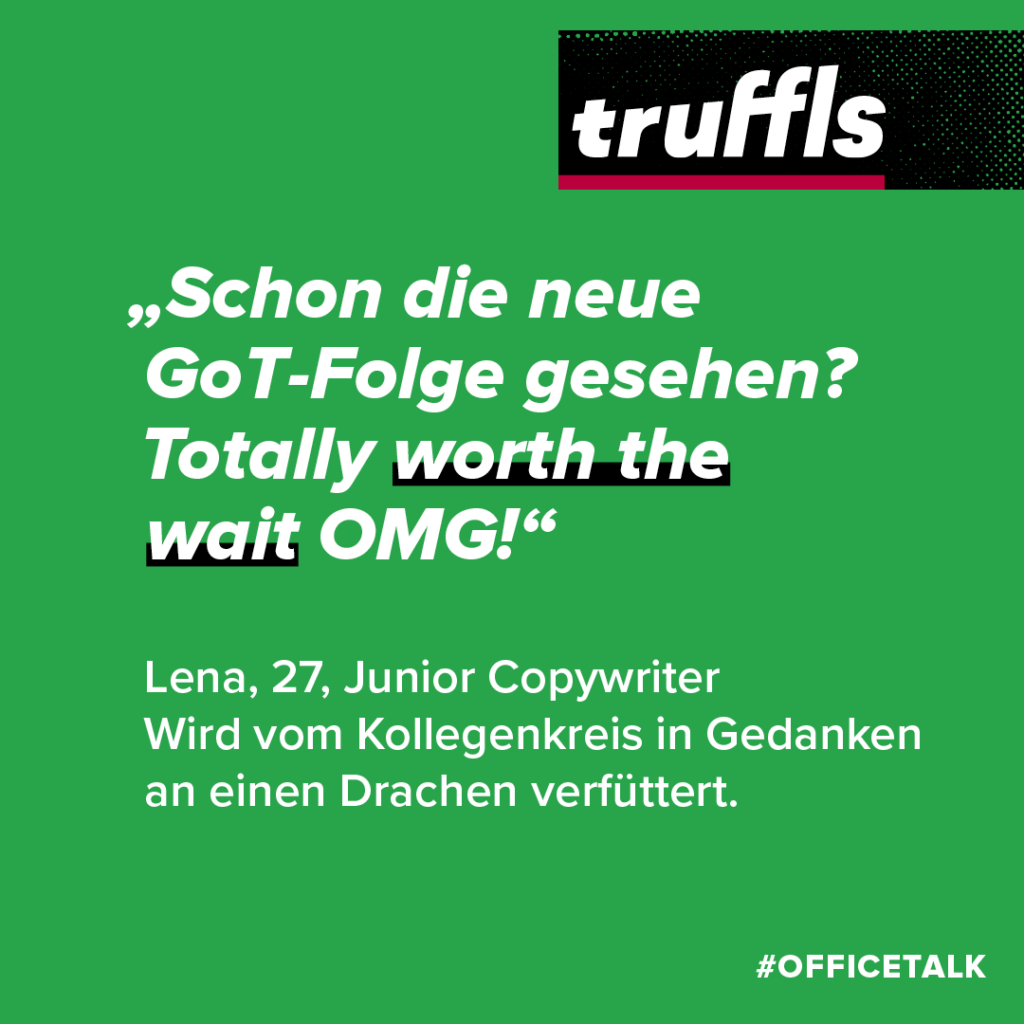
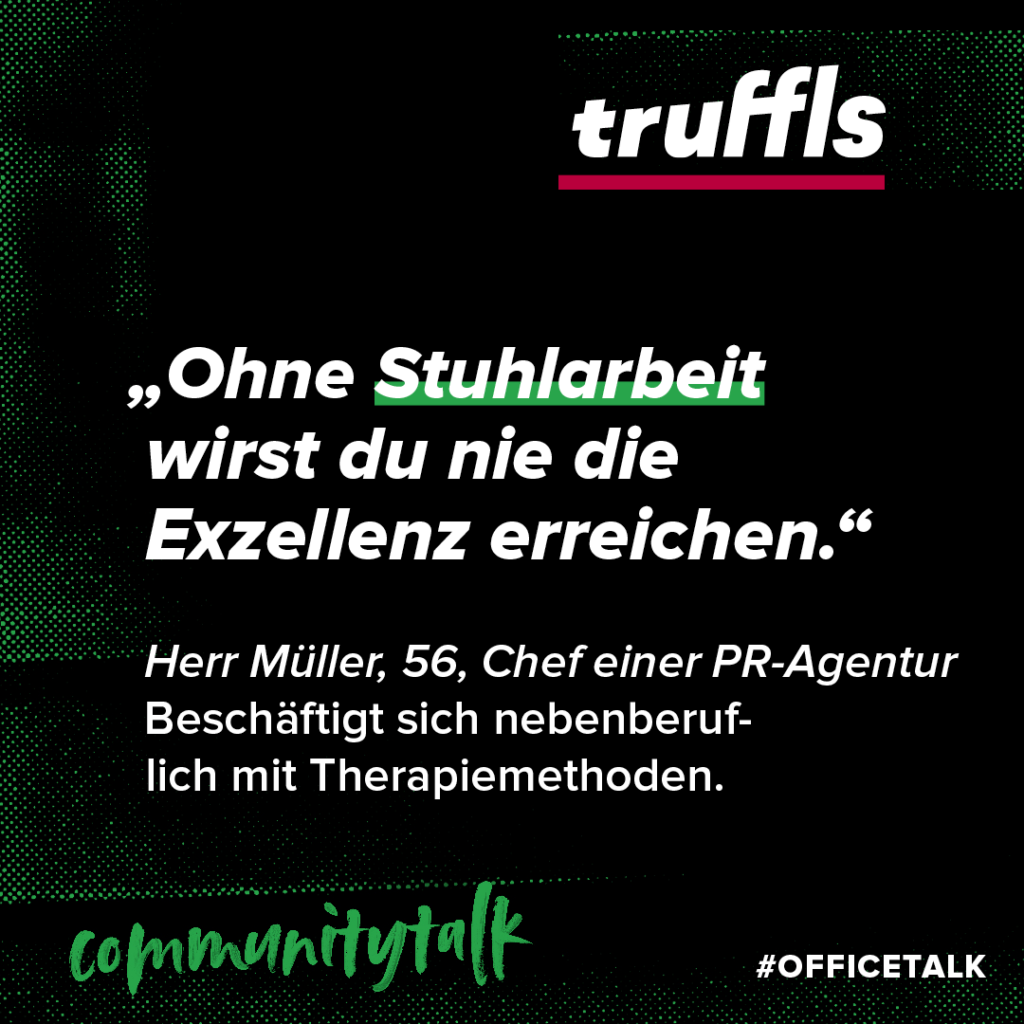
Internal Alignment: Principles were transformed into ”Office Posters“ to serve as daily visual reminders of the brand’s behavioral standards for the team.
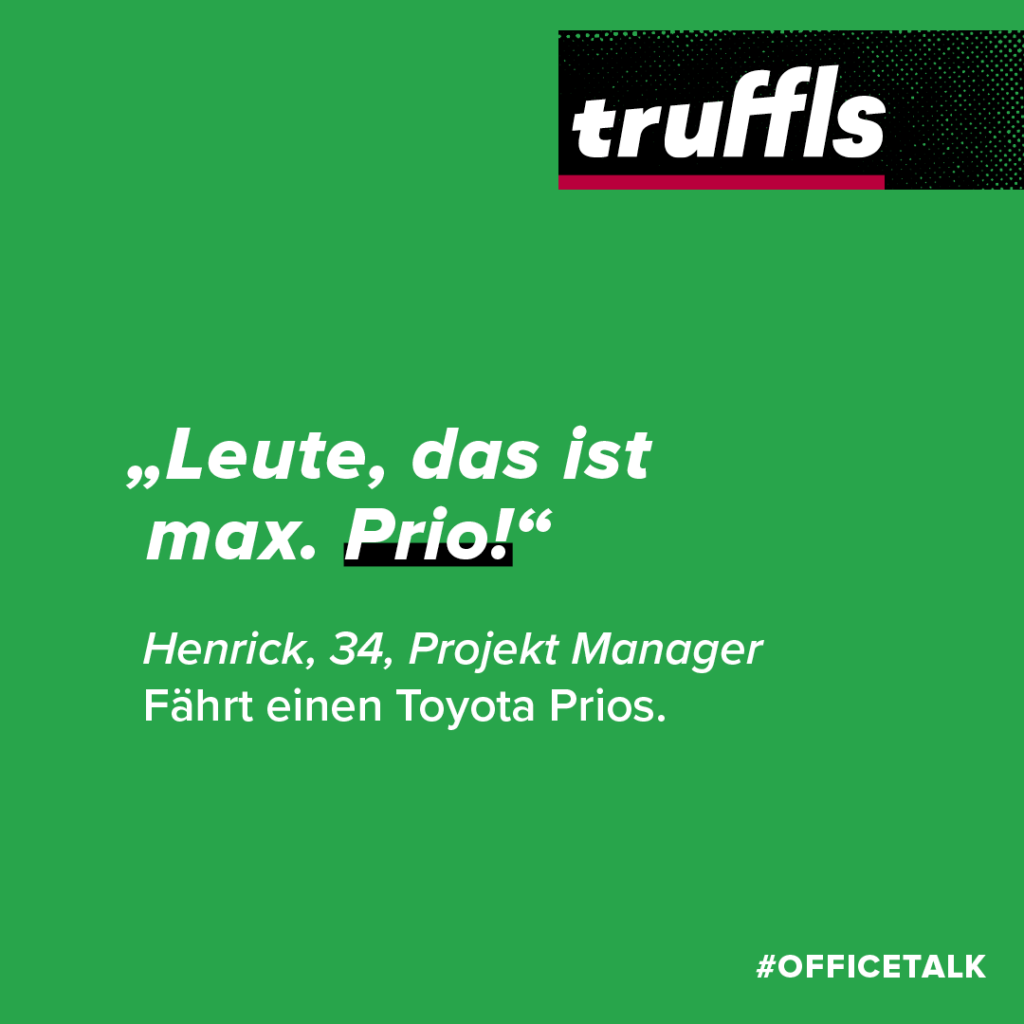
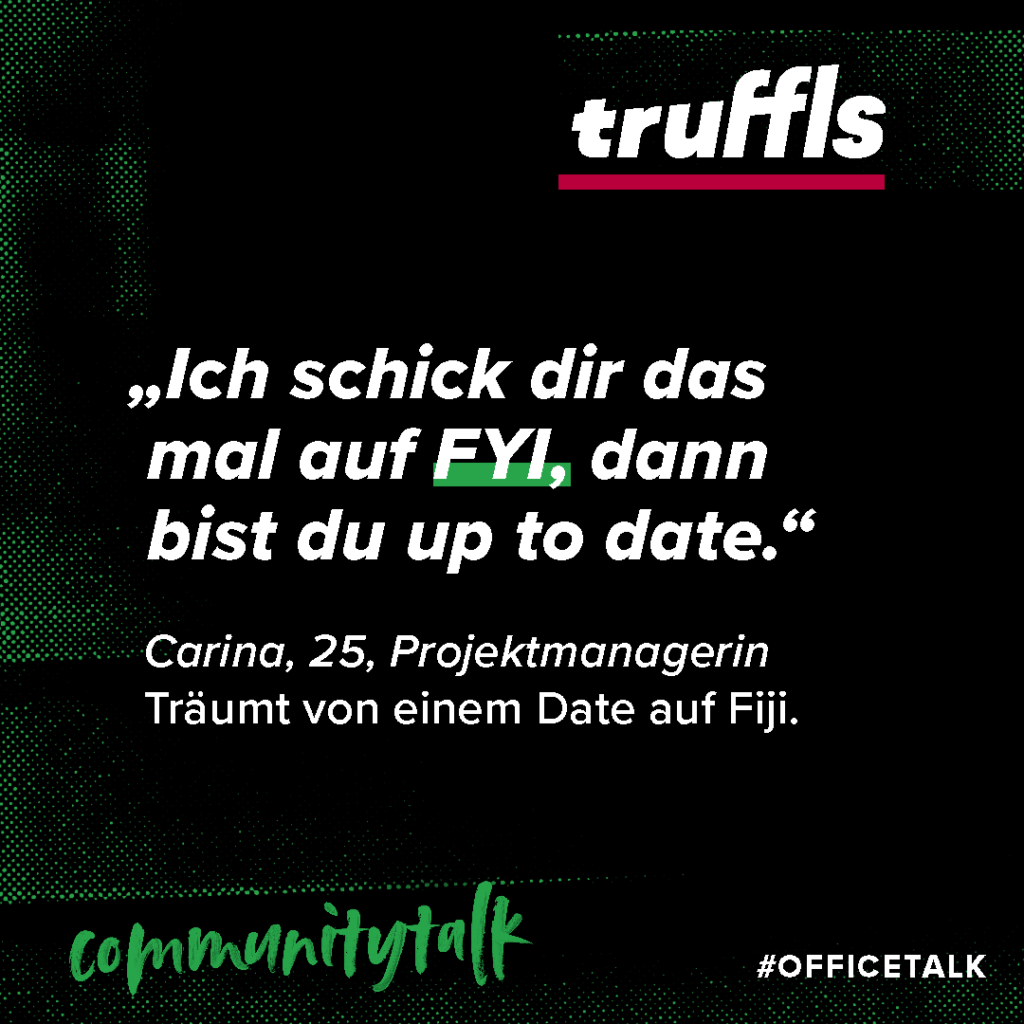
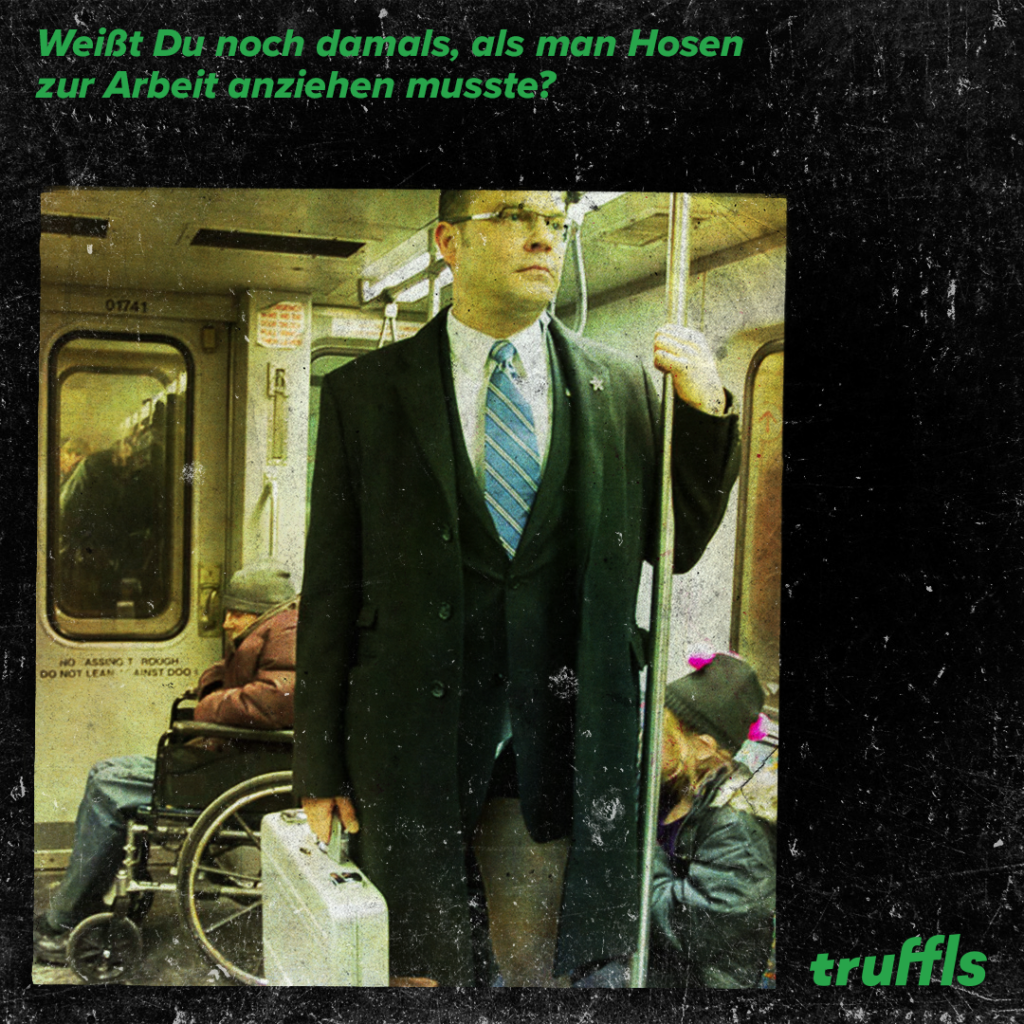
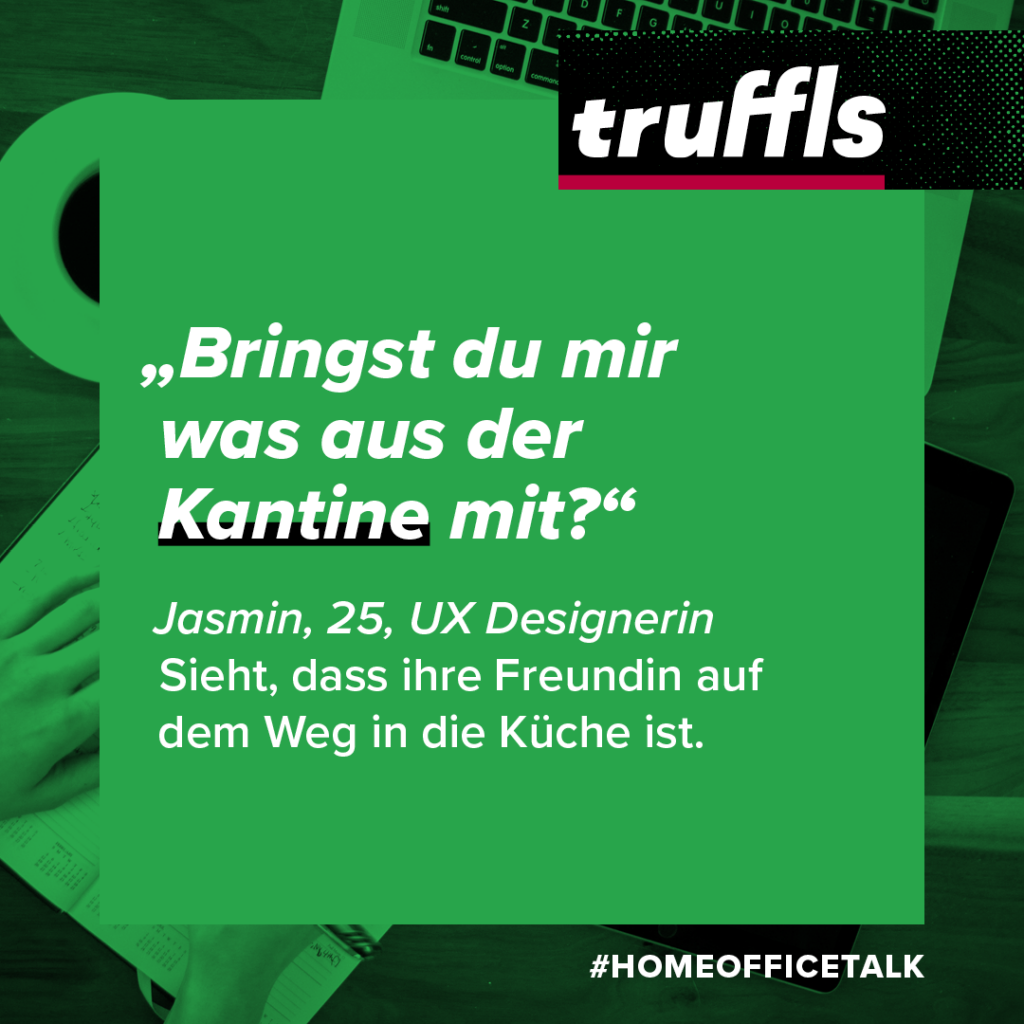
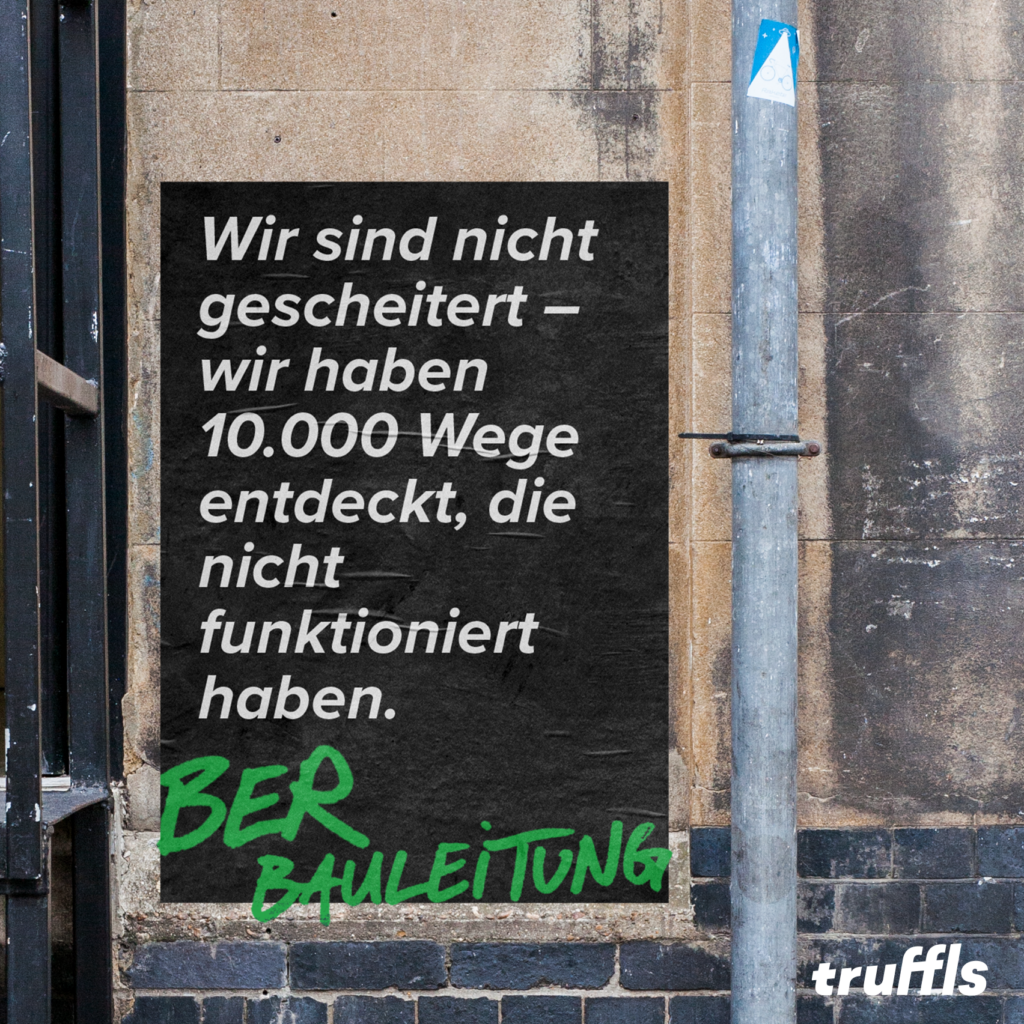
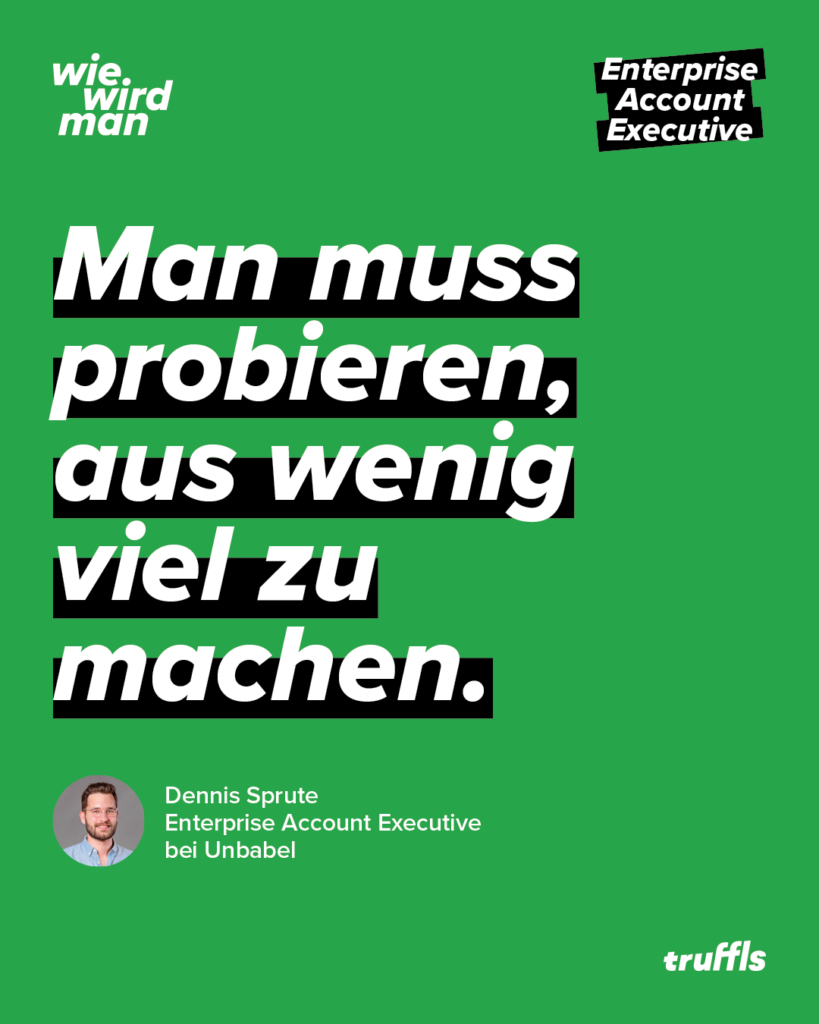
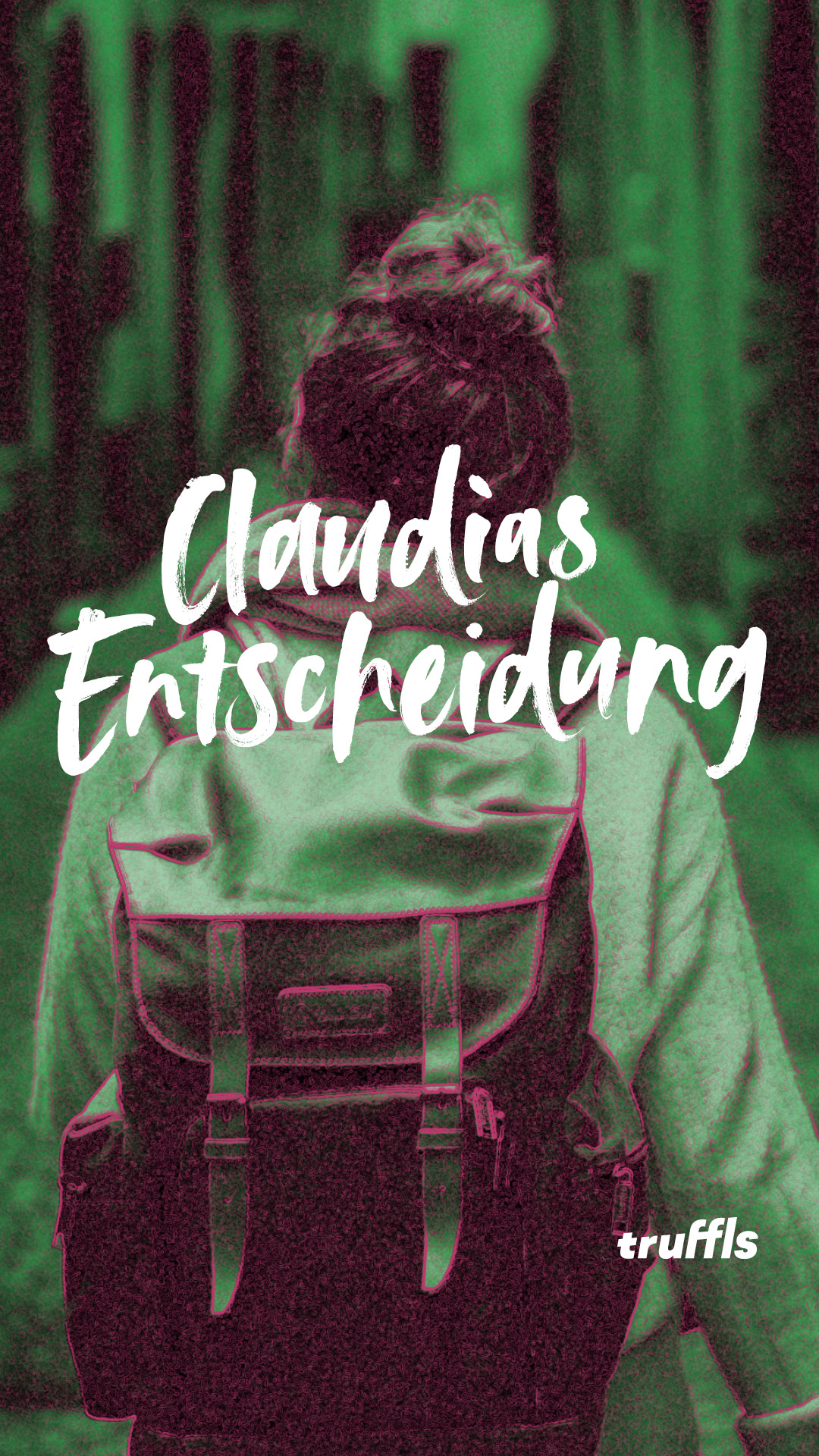
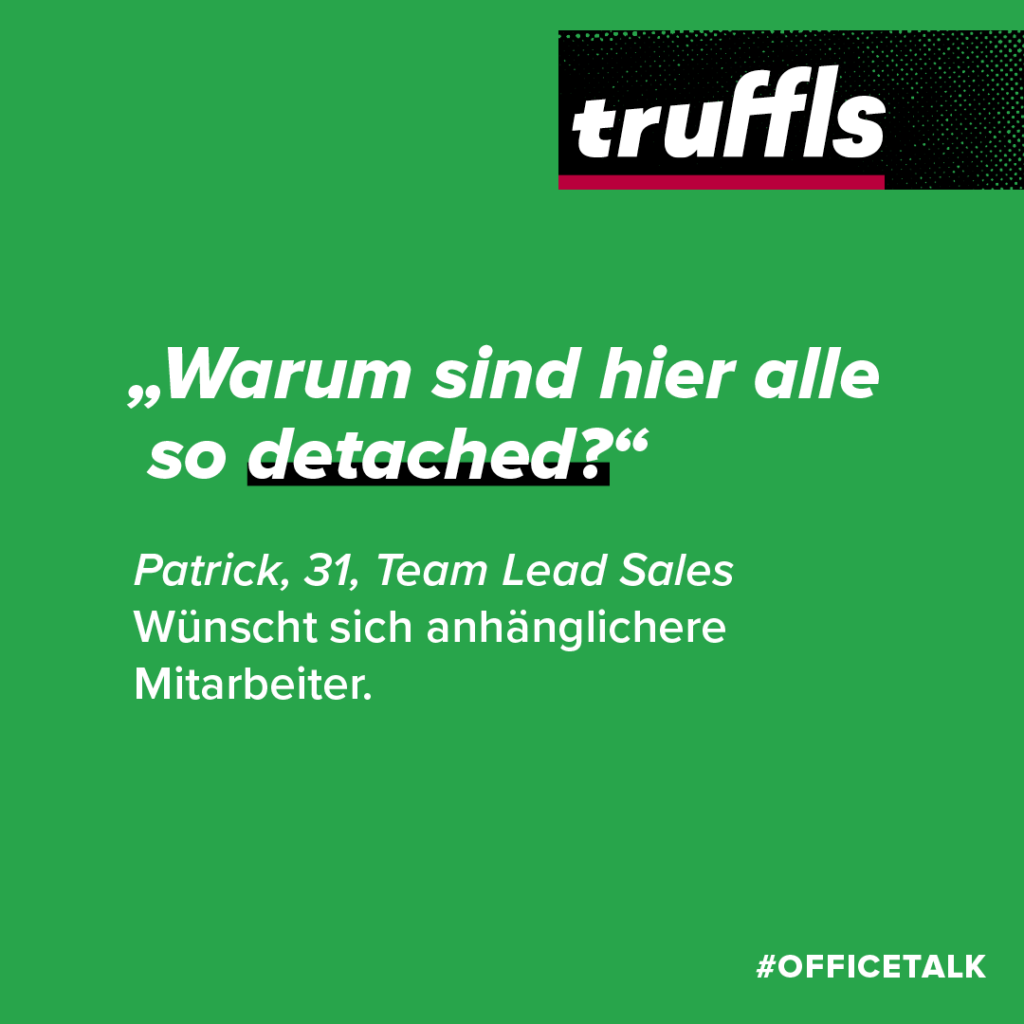
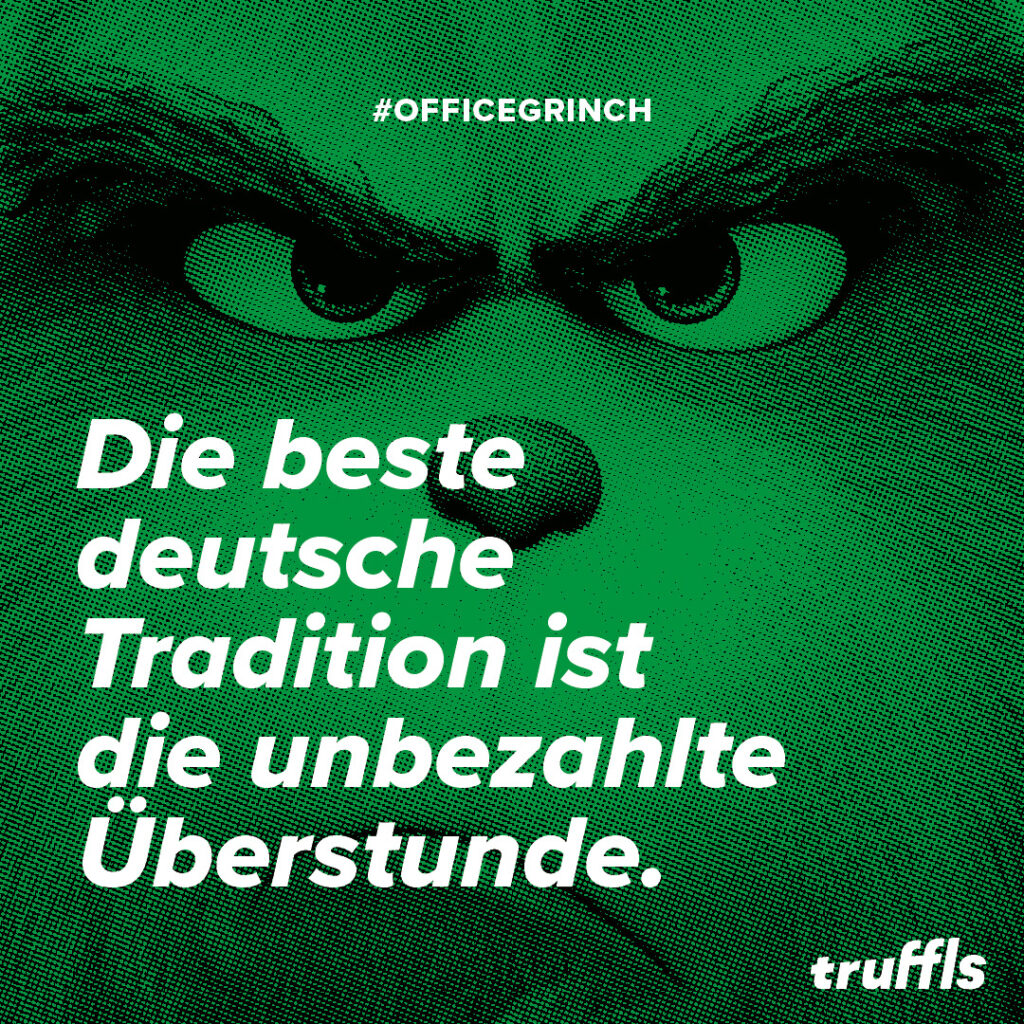
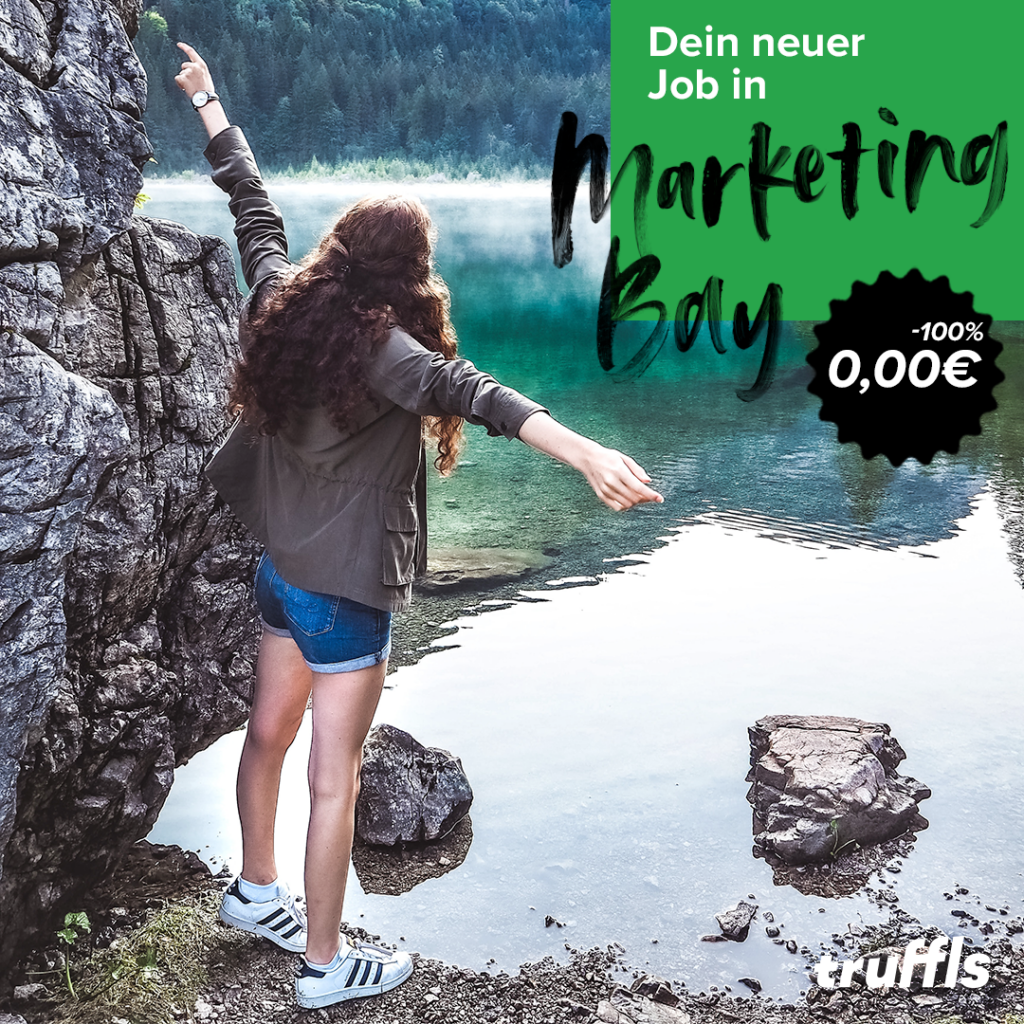
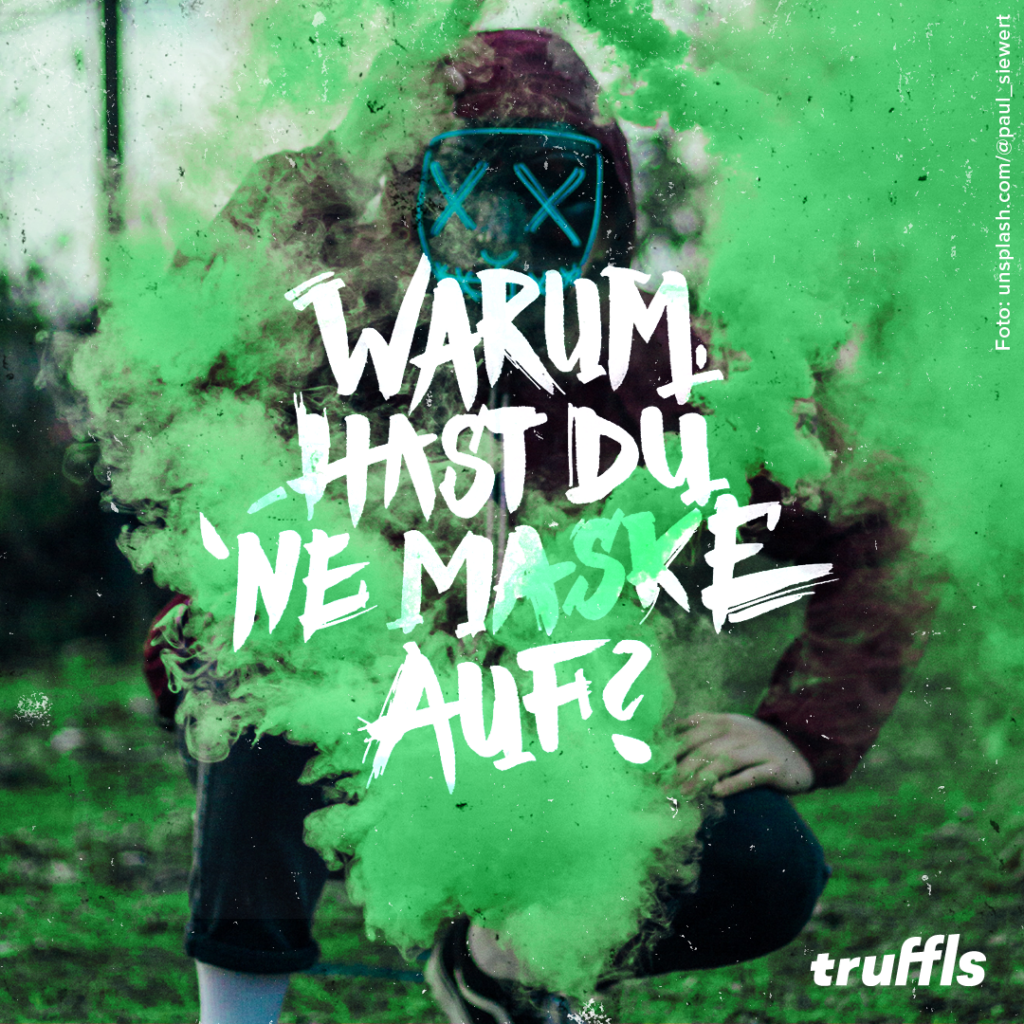
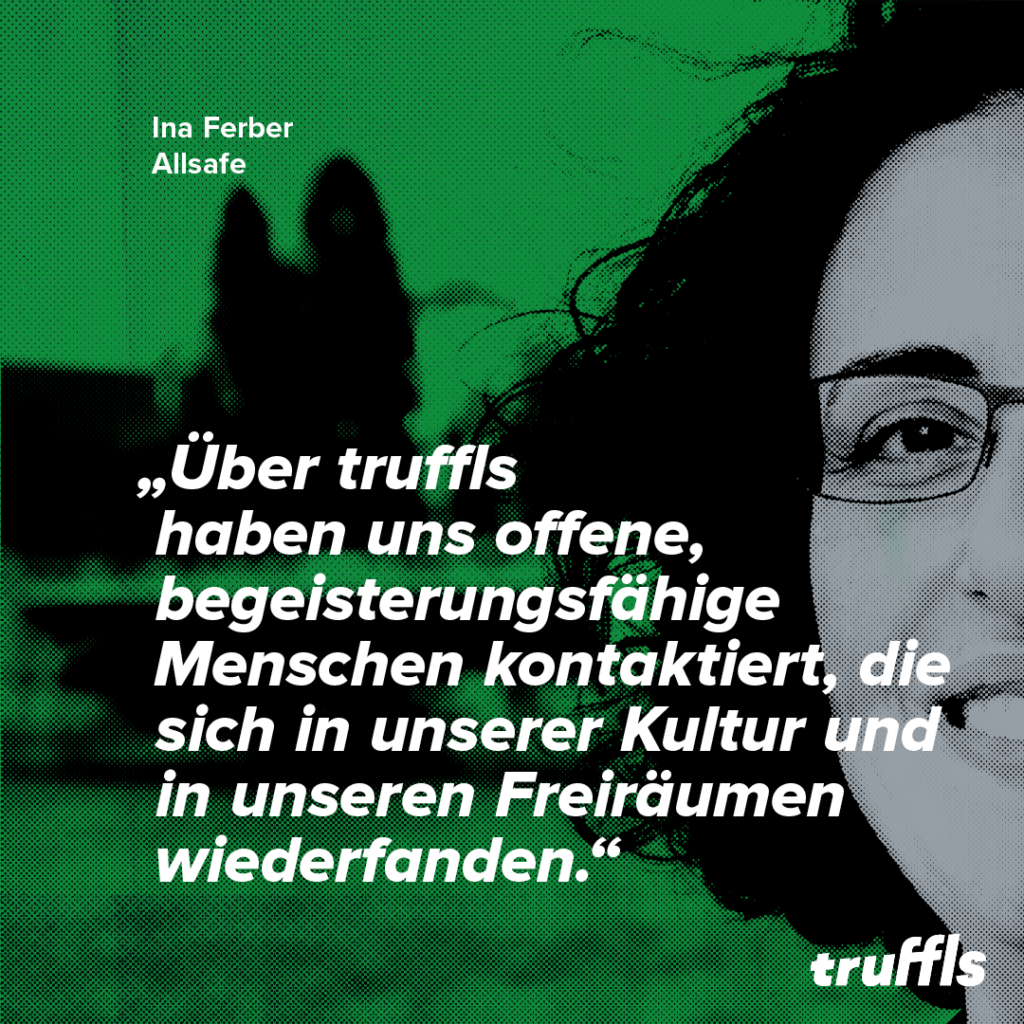
External Communication: We developed specific content formats for customers that reflect these principles, ensuring the brand’s core values are felt at every touchpoint.


Brand Stories
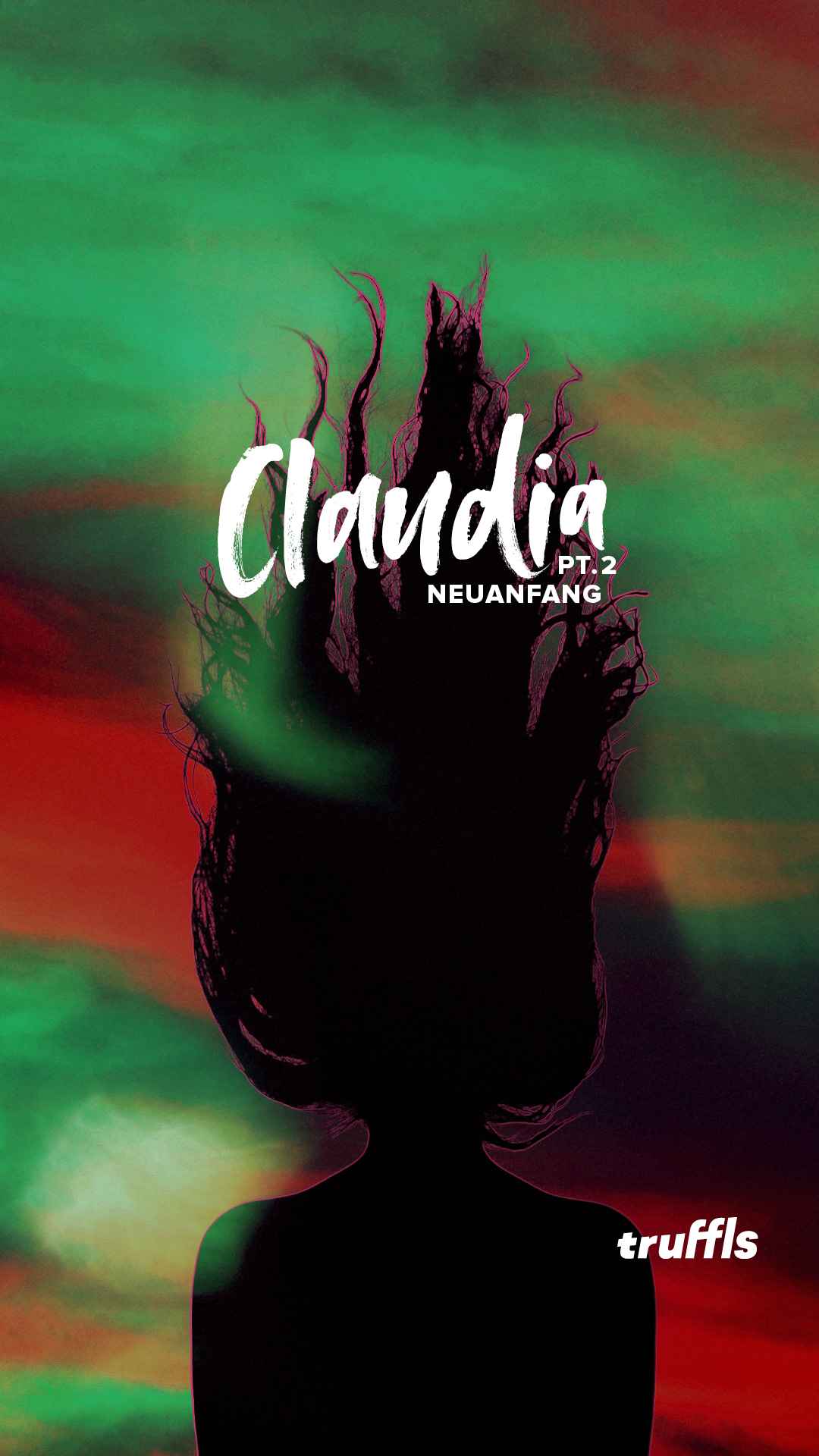
We identify and curate a range of key themes that serve as the narrative foundation for the brand’s communication channels.
This process can either culminate in a comprehensive communication strategy with clearly defined objectives or remain a flexible collection of audience-centric topics designed to drive engagement.

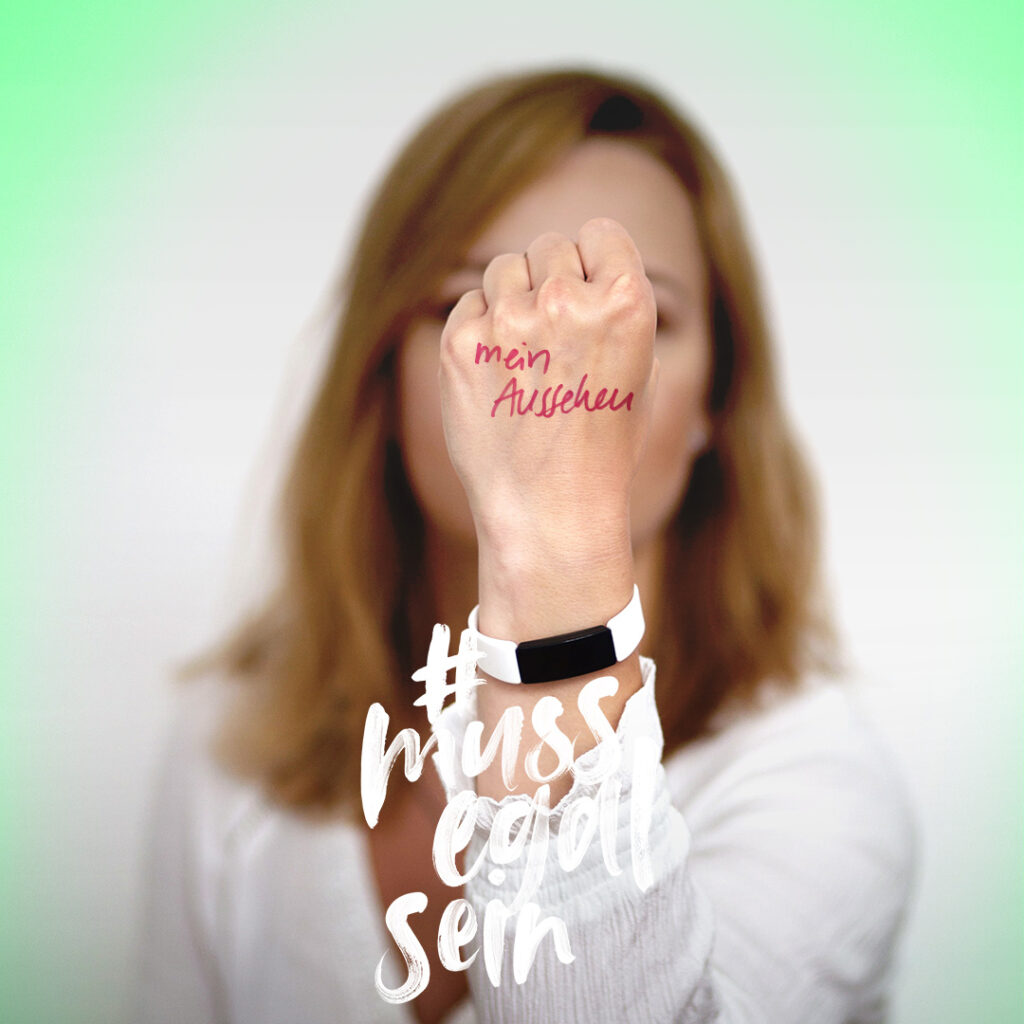
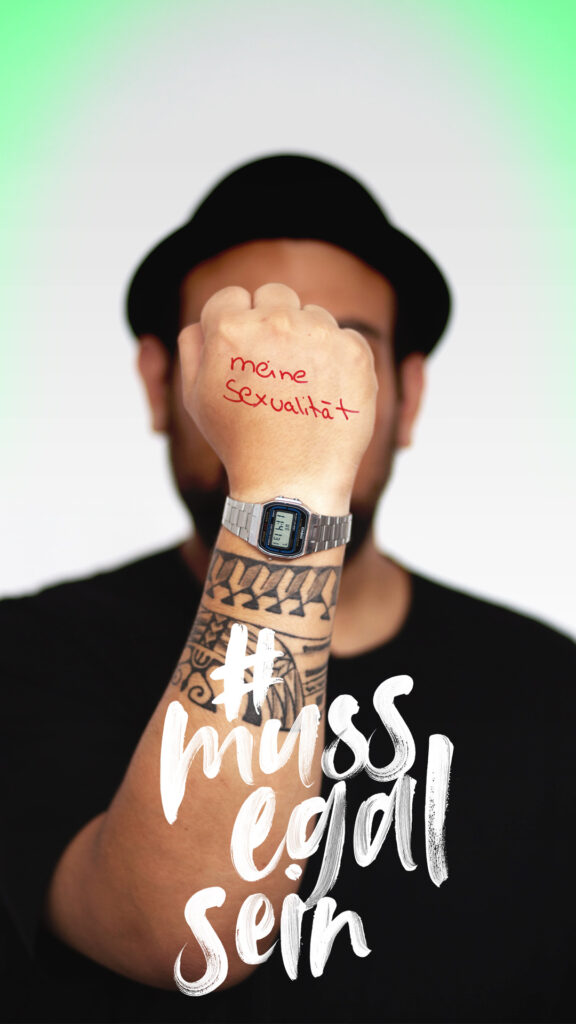
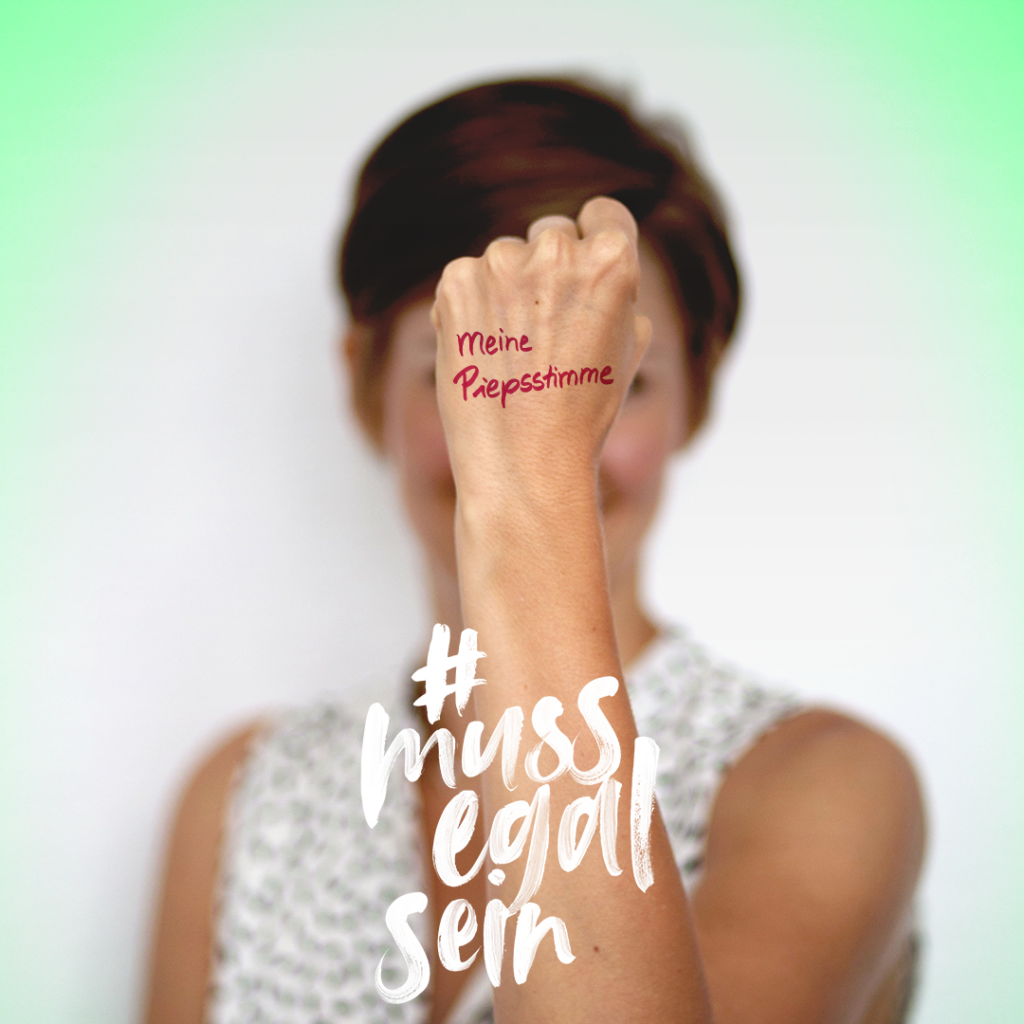
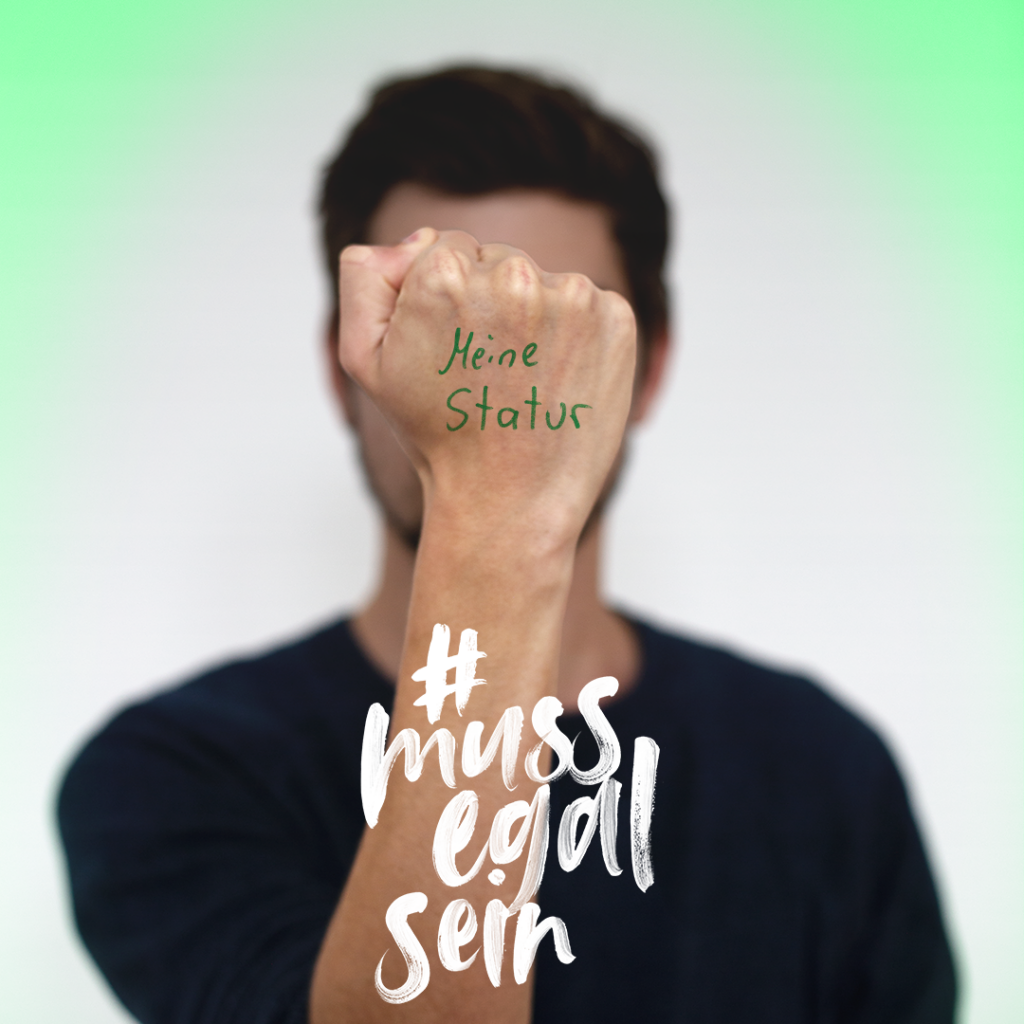
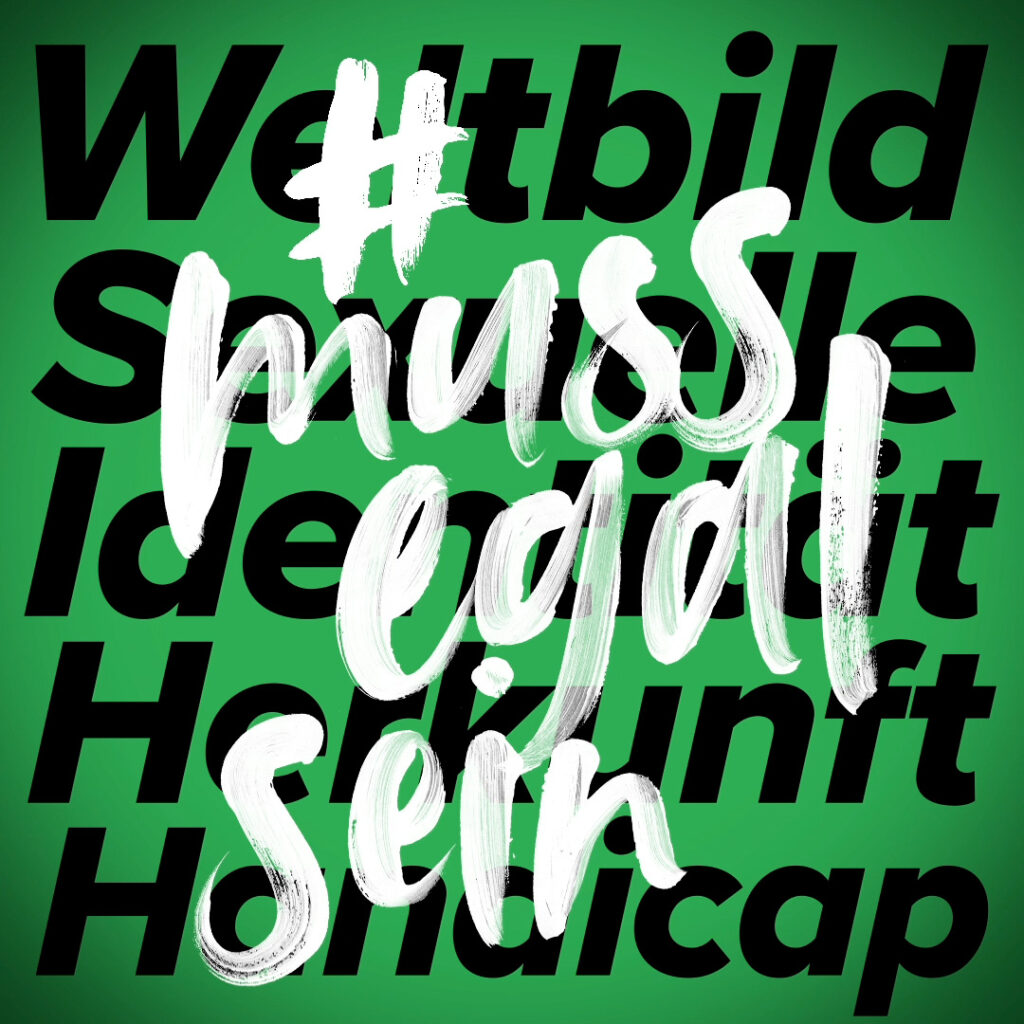
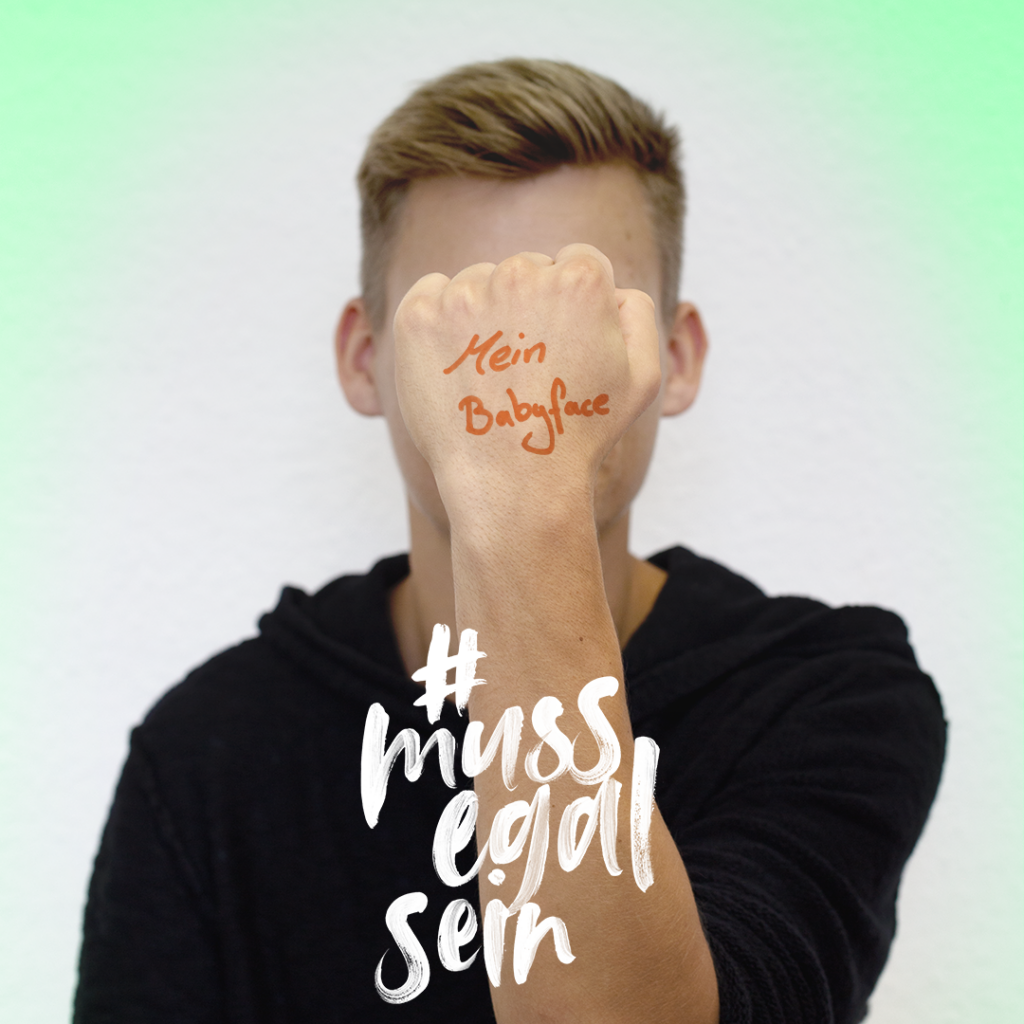
Campaign #mussegalsein
The #mussegalsein campaign serves as a powerful brand statement on diversity within the professional world.
Visual Impact: This initiative aligns with the “bold” and ”captivating“ pillars of the design approach, using high-impact communication to address critical societal issues in the workplace.
The Message: The campaign reinforces the brand’s “appreciative” value by asserting that personal characteristics should be irrelevant to professional opportunity.
Brand Positioning: By launching a movement-based hashtag, the brand transitions from a service provider to a social advocate, challenging the status quo of the recruitment industry.
More Content Gallery